“It is our collective and individual responsibility to preserve and tend to the world in which we all live.”
Dalai Lama
Hard to believe my second week is already over, and the week went by very quickly. I have a daily routine on school days, and I’m learning a lot. I find myself speaking more, but my private lesson is still tiring. My instructor and I have gotten into a groove, and this coming week we will focus on pronunciation, at my request. I know what you are thinking, Italian words are pronounced the way they are spelled, but not really. The Italian letters have different sounds, i is pronounced ē, e is pronounced ā, and so on. I always hated grammar rules and when you learn a foreign language understanding grammar is key. Italian has a million (ok, maybe less) verb tenses, you change the endings of words if the subject is masculine or feminine, and you can’t translate your English sentence into Italian word for word. Honesty, you need to ditch the English and “think” in Italian. I’m getting there, slowly.
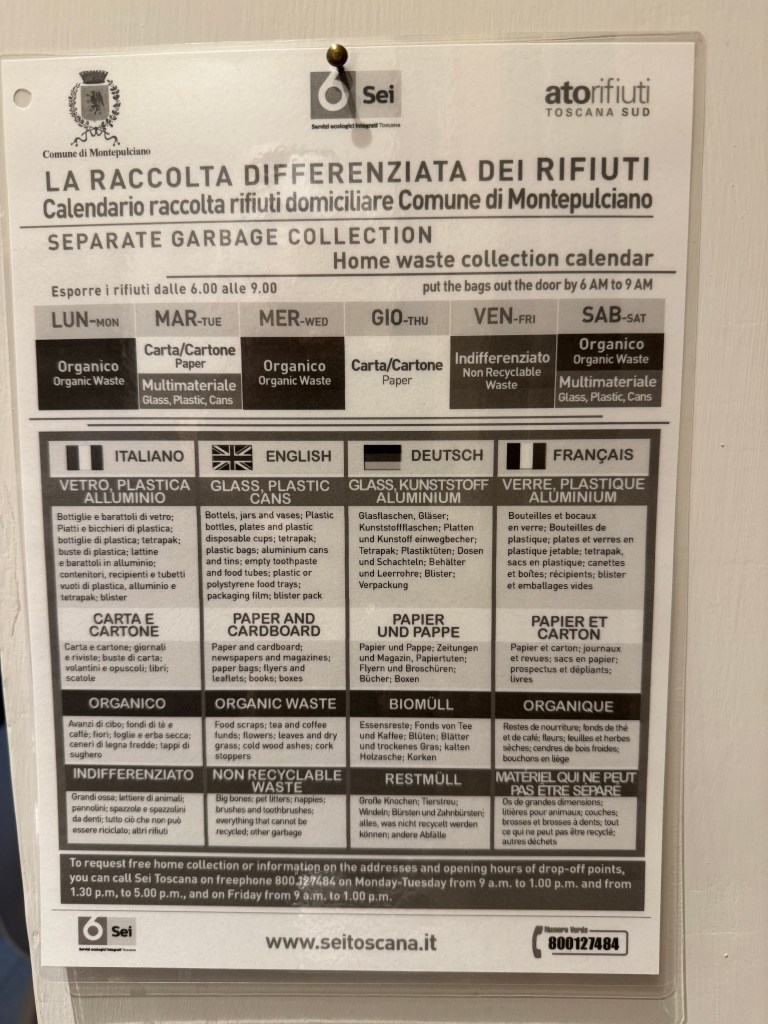
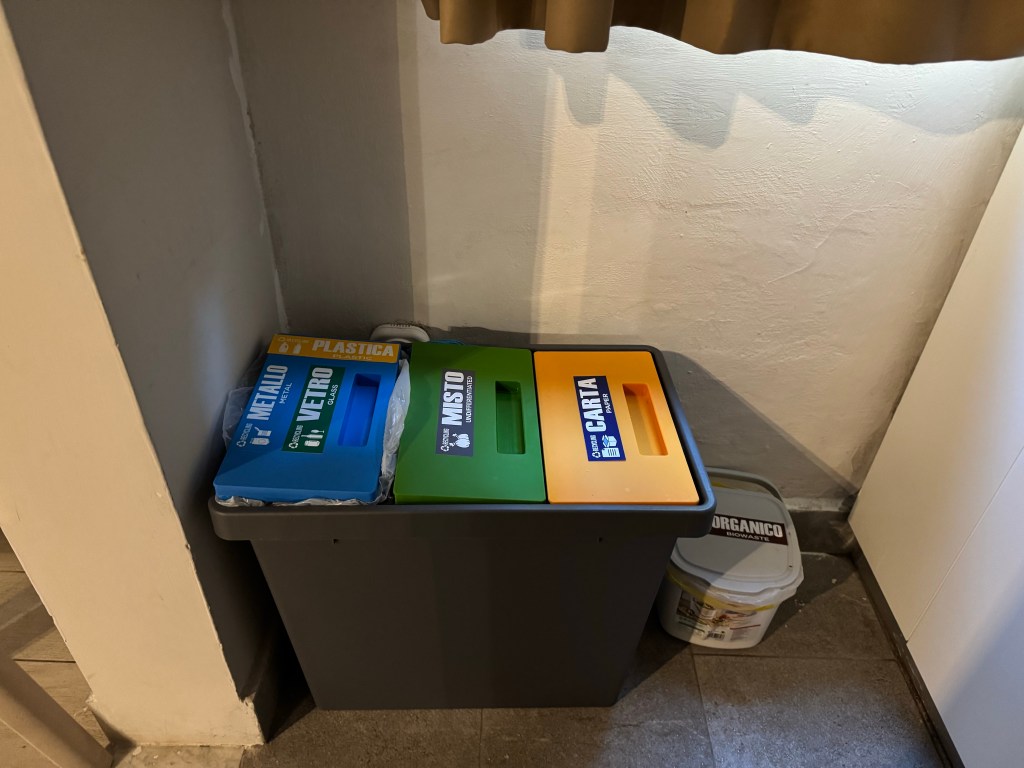
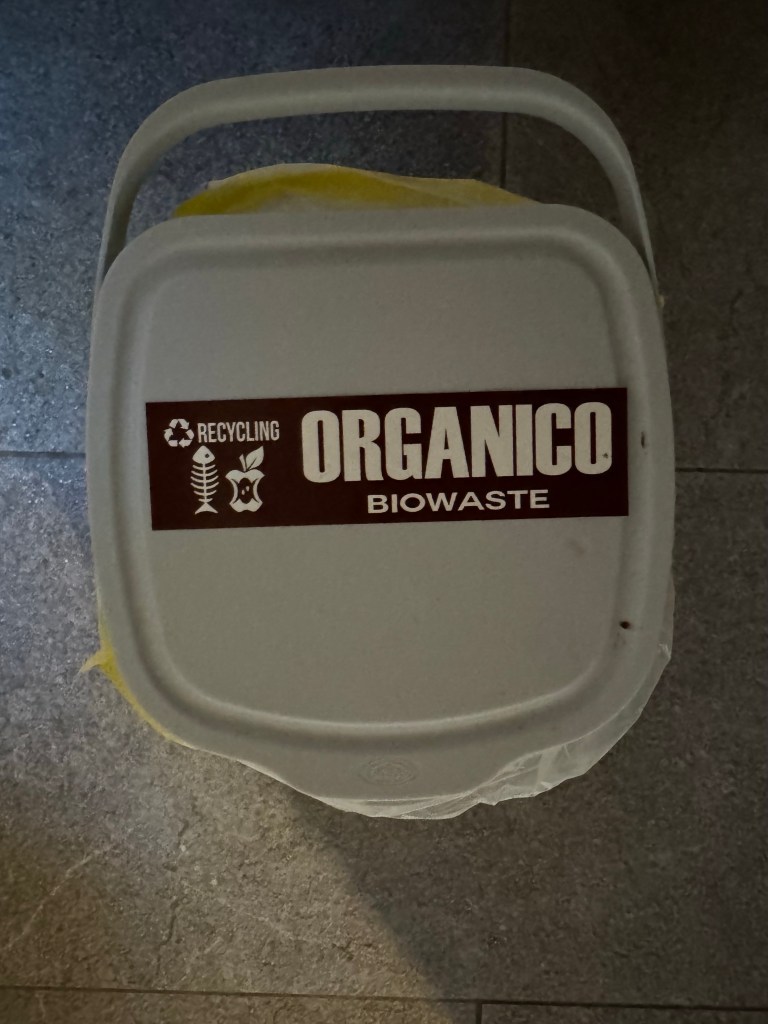
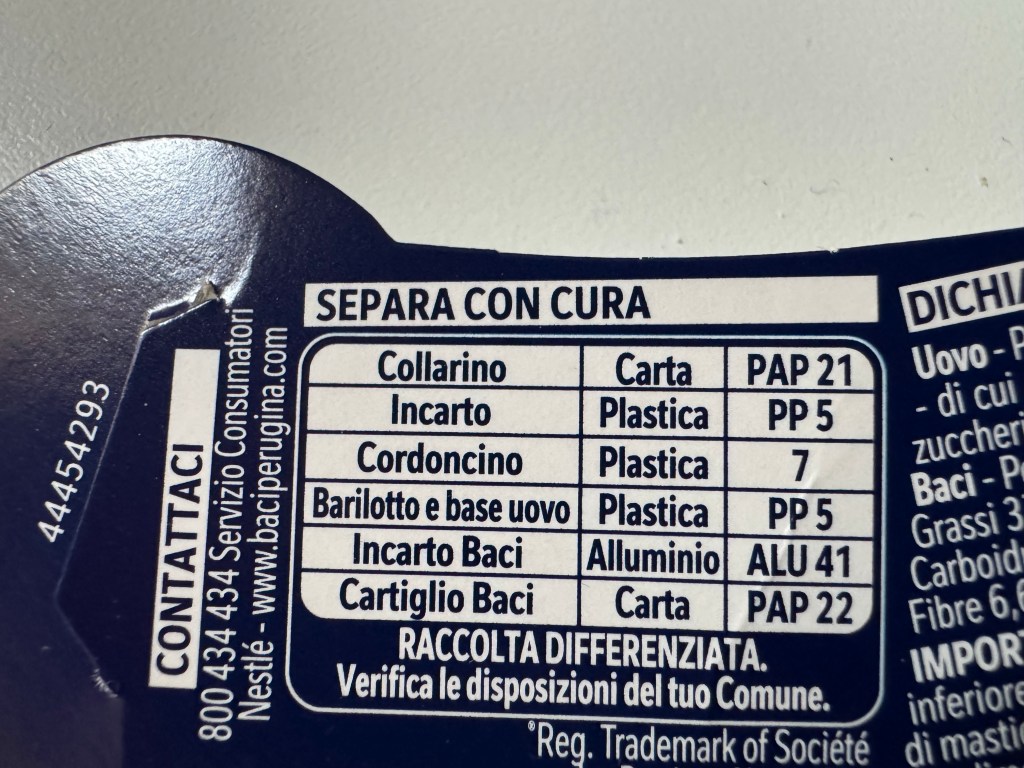
Living life as a local and not in a hotel makes you see some of the day-to-day differences in everyday life here versus at home. As the US is chopping away at many of the policies that were meant to protect our planet, and recycling is a personal choice in most communities, I was amazed to see how much is recycled in Italy. The trash can in an Italian home is not just a bin for trash and one for “recycled goods”. It’s four bins – organics, papers, a bin that combines plastic, glass, and metal, and one for whatever doesn’t belong in the other three. I was surprised to see some of the items that go in the “plastic, glass, metal” – empty toothpaste tubes, polystyrene and plastic food trays, packaging film, blister packs, etc. Given you have four small bins in the home, trash is collected six days a week, different items on different days, but everything is collected at least twice a week. Once you get used to the system, it’s easy. Bags are put outside your door between 6a – 9a, and most bags are opaque so the collectors can see if you are sorting your trash correctly. If you don’t, you could face fines. The commune here gives out free bags for the various bins, but if they run out, you can buy them in the grocery store. Some of you may think this is a burden, but we have one planet, and it is our job to take care of it. If you are still not convinced this is a worthwhile effort… there is a combined 8+ billion tons of waste produced per year around the world. Billions of tons of waste every year. Everyone has to do their part to help preserve the planet for the next generation.
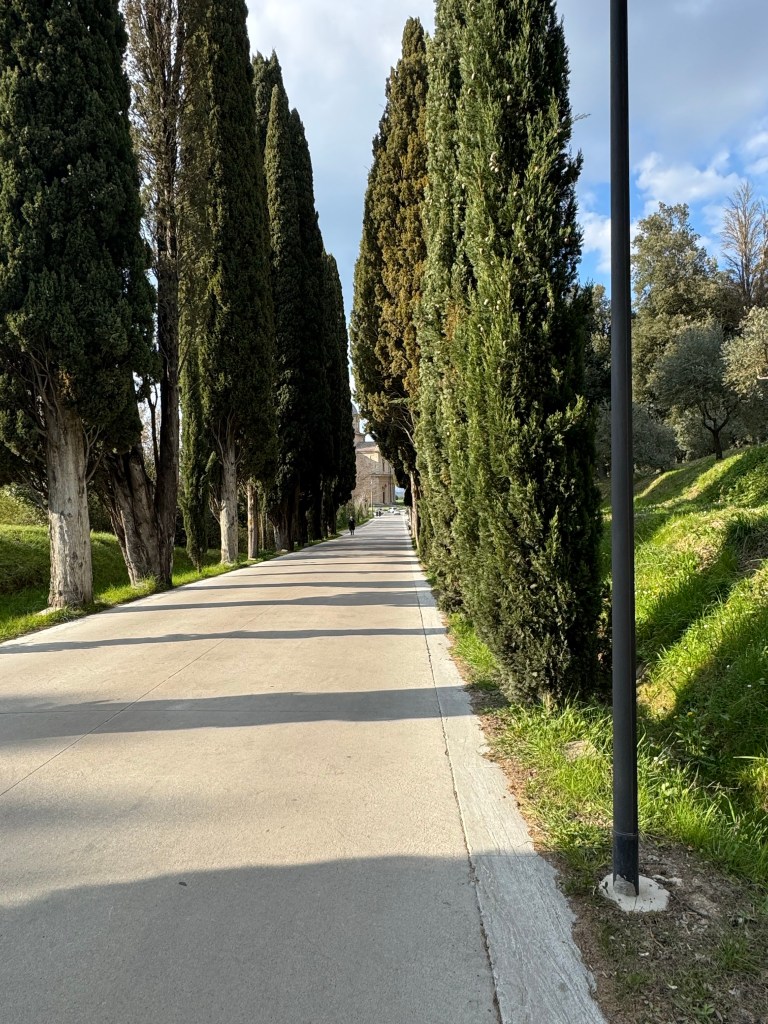
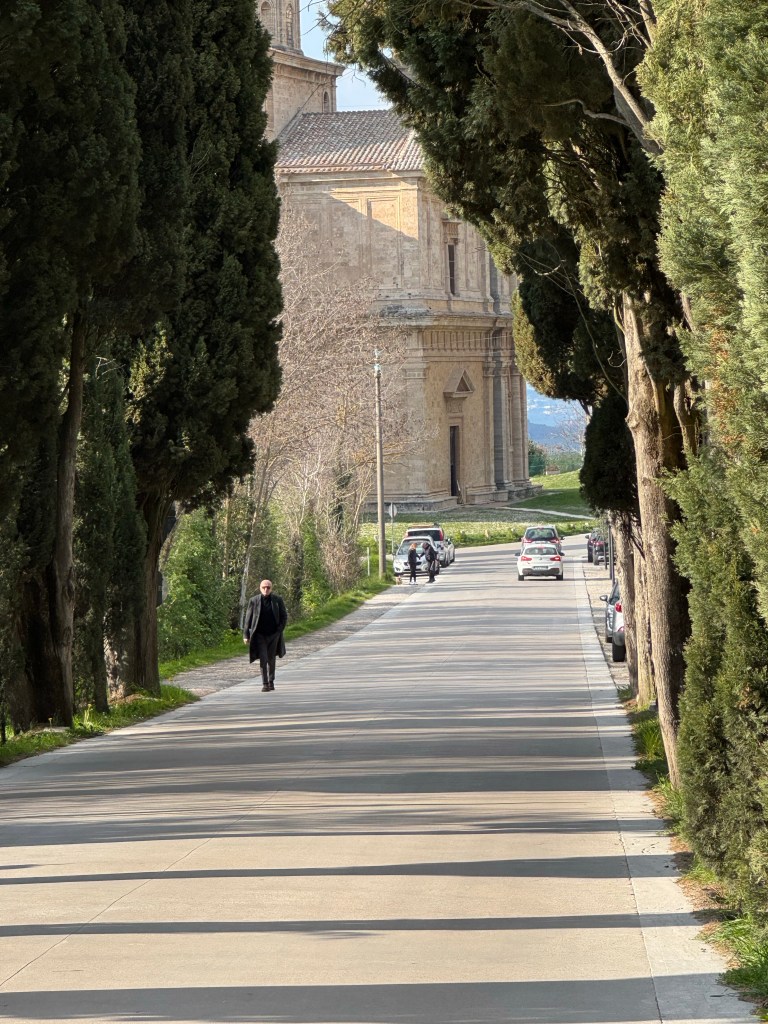
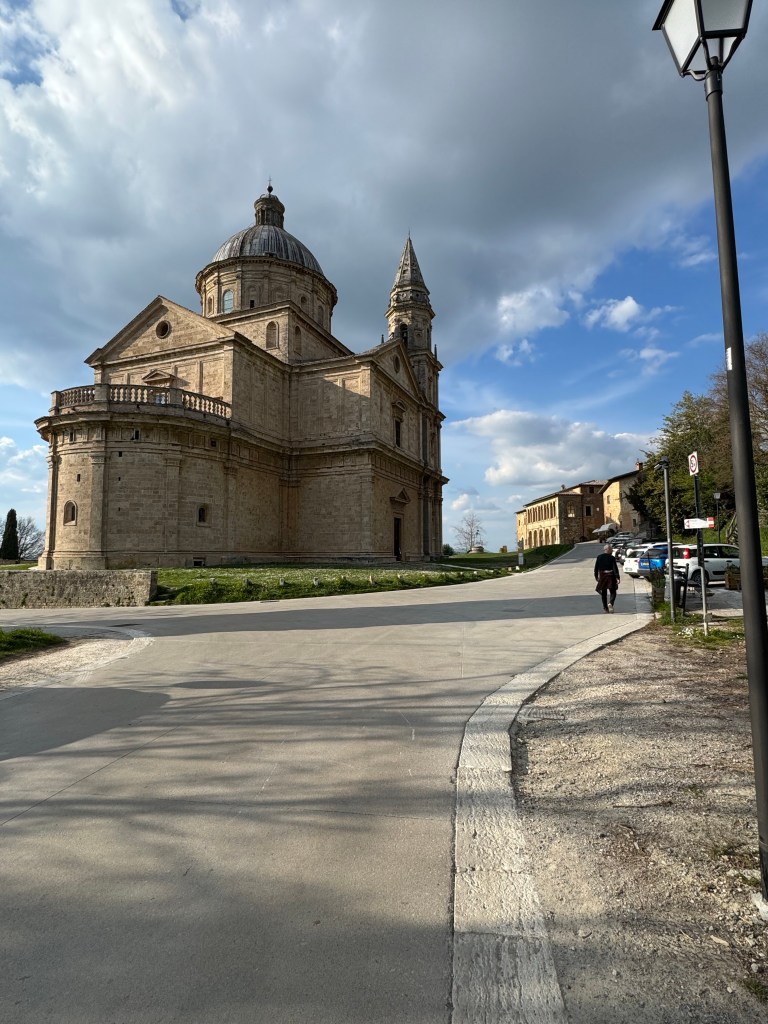
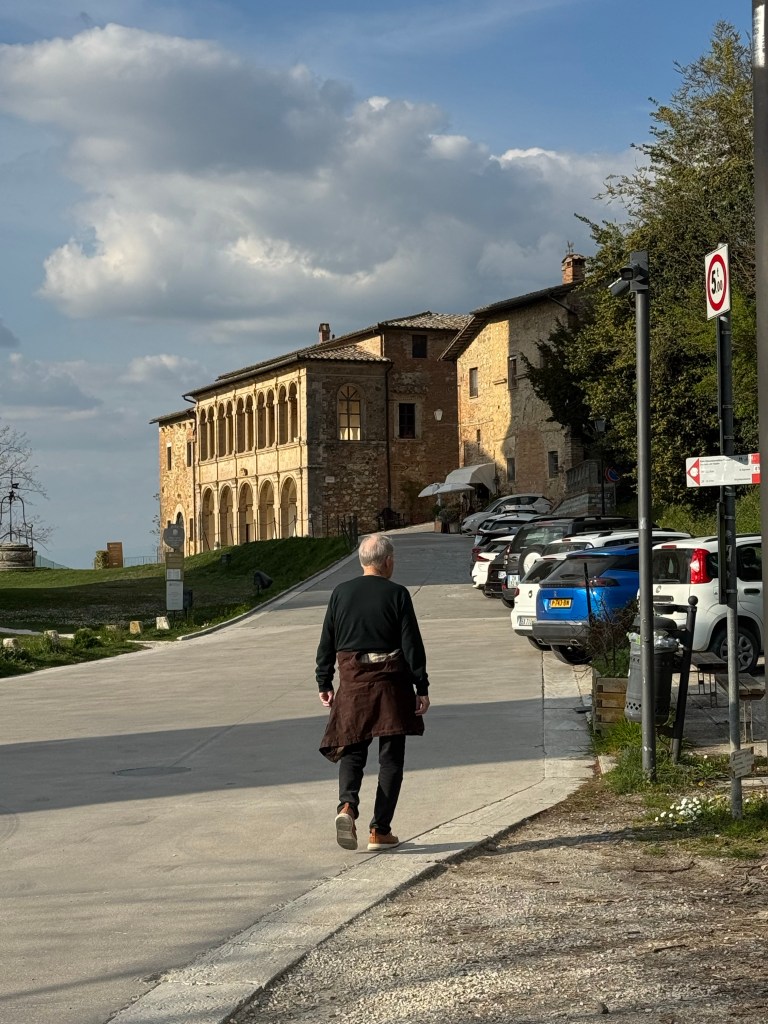
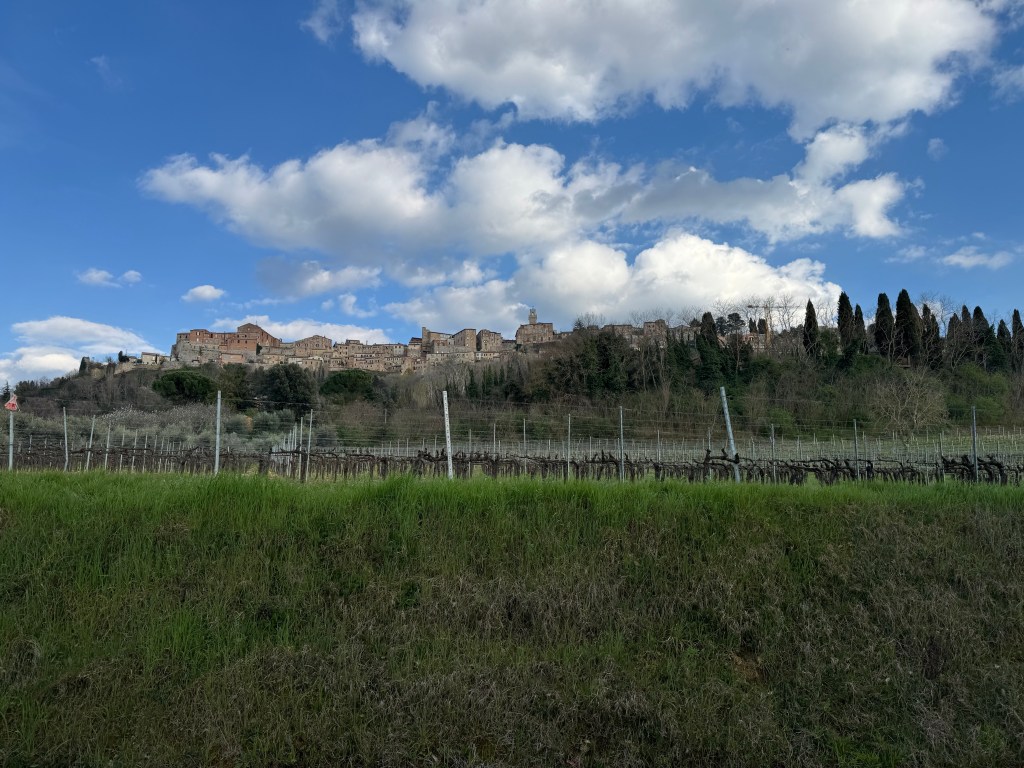
I went for a walk outside the walls of the town center Tuesday. The weather was beautiful.
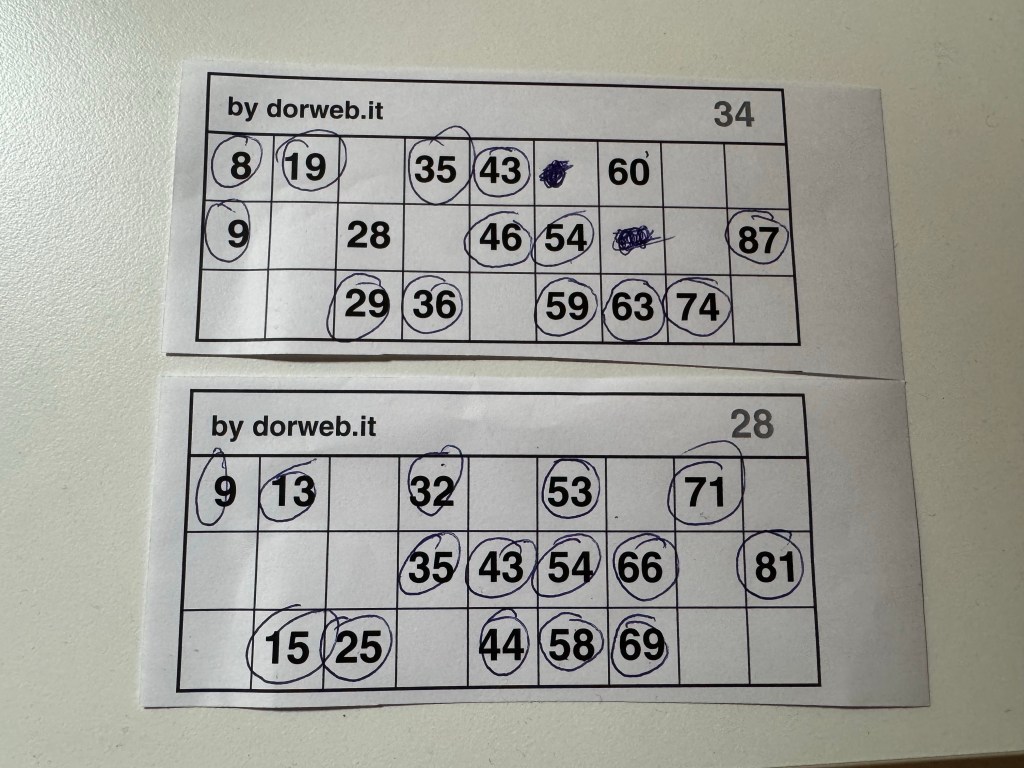
On Wednesday the school offered an afternoon activity, Tombola. It is very similar to bingo, but you have five opportunities to win – ambo, terno, quaterna, cinquina, and tombola. Tombola is a fun way to reinforce numbers in Italian while you are learning. You are given cards with numbers on them, and when the person running the game selects a number from the bin and calls it out, if you have it, you can circle or cross it out. If you are the first person to match two numbers in a horizontal row you say Ambo. If you match three numbers (if you won Ambo, you need to use a different horizontal row to match 3) you call out Terno, four numbers is Quaterna, five is Cinquina, and if you get all the numbers it’s Tombola! I’m like my parents, and never have any luck with these types of games. My parents played bingo quite a few times at the independent living community they moved into their final months, and never won. The first Valentine’s Day after my dad had passed, my mom won two games. I told her dad was with her and brought her luck for Valentine’s. Well my birthday was Tuesday, and a day later, I win two games – Terno and the big Tombola! I guess my mom and dad wanted to give me a birthday present.
A new Italian word – Lo sciopero – “the strike”. When you are a traveler using public transport in Italy, it will become your least favorite Italian word. Italy has quite a few transportation strikes every month, so you need to be prepared to be flexible if you are not renting a car. Thankfully nowadays you know in advance when and what strikes they are planning. You can find all the information online around the last week of the preceding month of the month you are concerned with. Some strikes will have already made public all the details, others may just be a warning that one is coming and for what mode of transport. You will need to check back later for the exact details, and it’s good to check back frequently if you are relying on public transportation.
I am using public transportation for much of my trip so I need to keep an eye on the strikes for April and May. I checked on Wednesday evening to see how it was shaping up for April, and much to my dismay they are anticipating a national train strike the day I am to leave Montepulciano and head to Cortona. I checked the bus schedule, but it would be over 3-hours with multiple transfers for a ride that takes about 40-minutes by car. I thought about leaving a day early and getting a hotel room in Cortona to wait for my friends, but I’ve already paid for my apartment though the 11th, so I decided to WhatsApp the driver I used when I arrived in Florence to see if he had availability on the 11th and his price. Thankfully he can take me to Cortona on the 11th. Yes, it will cost much more than public transport, but it’s much cheaper than paying for a hotel room in Cortona. One problem solved, so on to the next strike issue…
There is a high probably my friends and I will face a general strike or sciopero generale dei trasporti, the day we planned to go to Siena from San Gimignano. This is being set-up as potentially the most disruptive day of the month. It could involve all modes of transportation, public and private, including trains, planes, metros, buses, ferries, transport delivery trucks, and even taxis depending on which are unions involved. There are hours where they are required to provide transportation in the early morning (6a-9a), and later in the evening (6p), but there will be fewer trains and buses running at those times. Our options are either a private driver, changing our plans, or hoping that taxis are still running. I’m not sure yet what we will do. I’ll check back in a week or so to see if there is more information available.
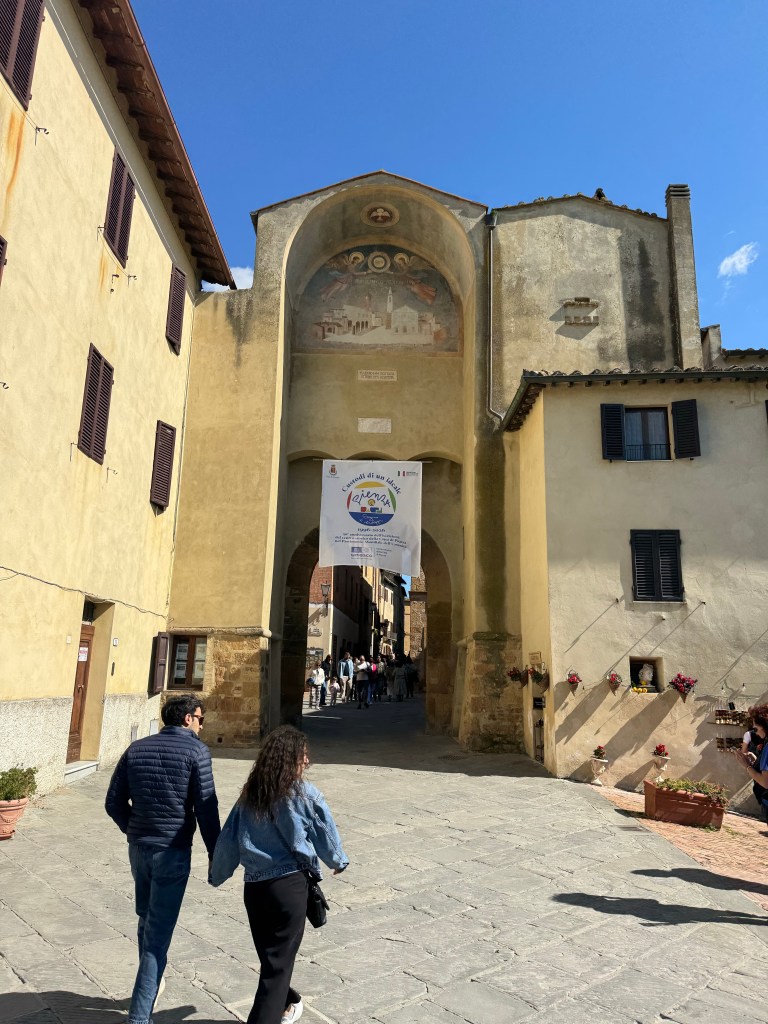
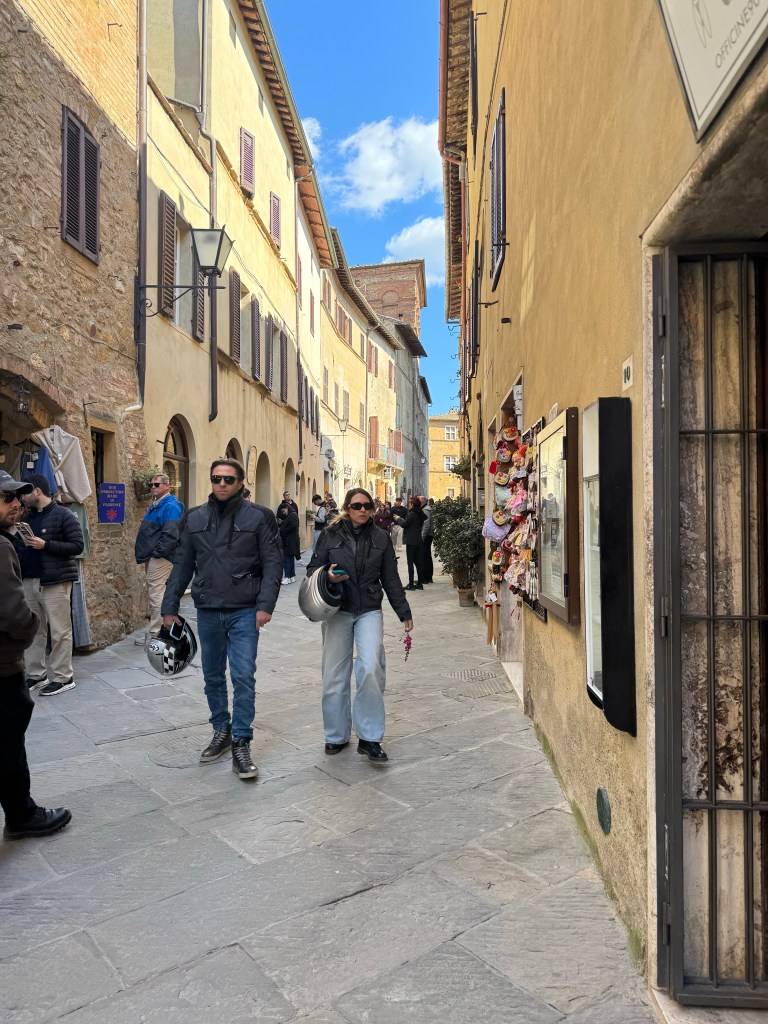
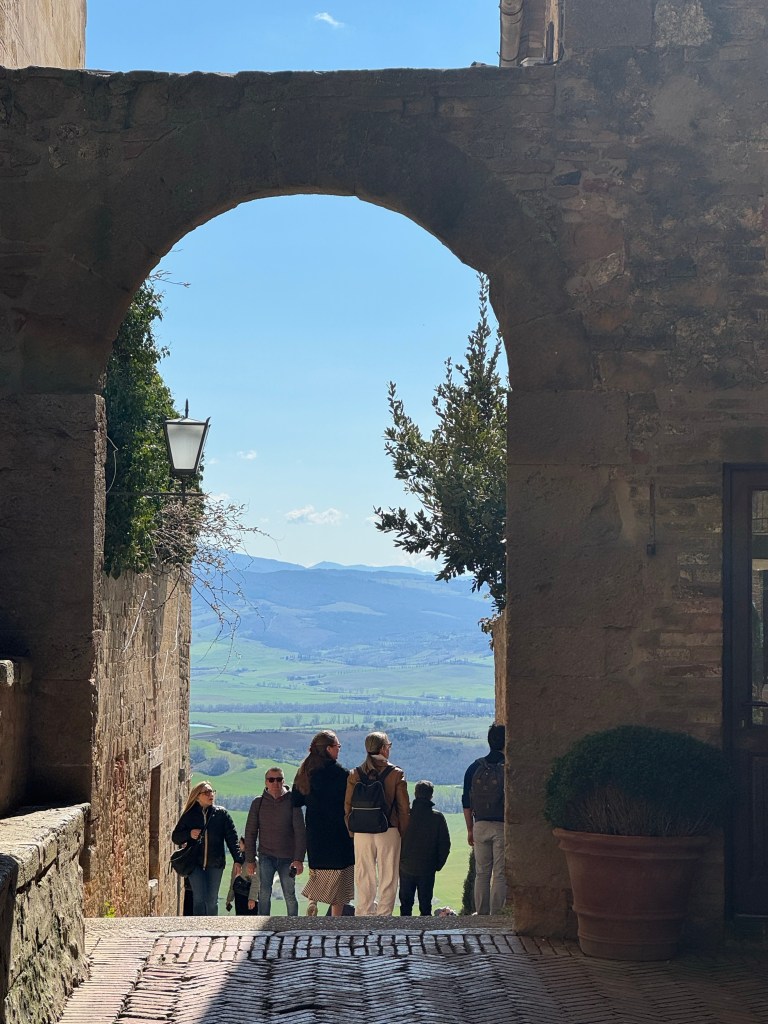
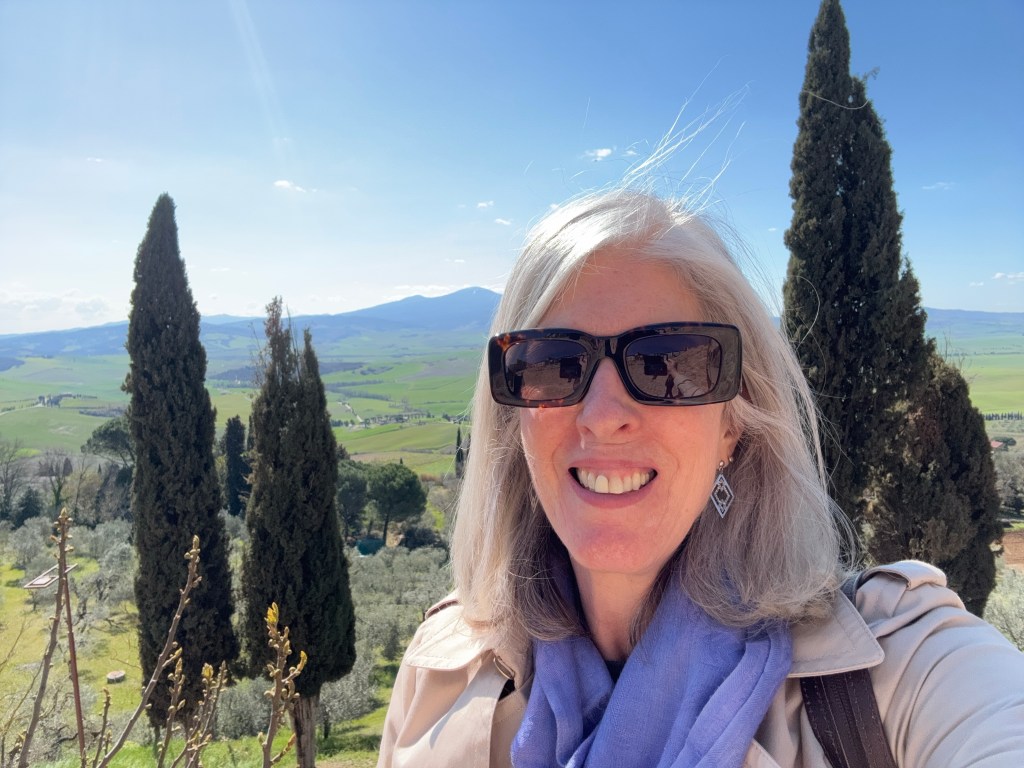
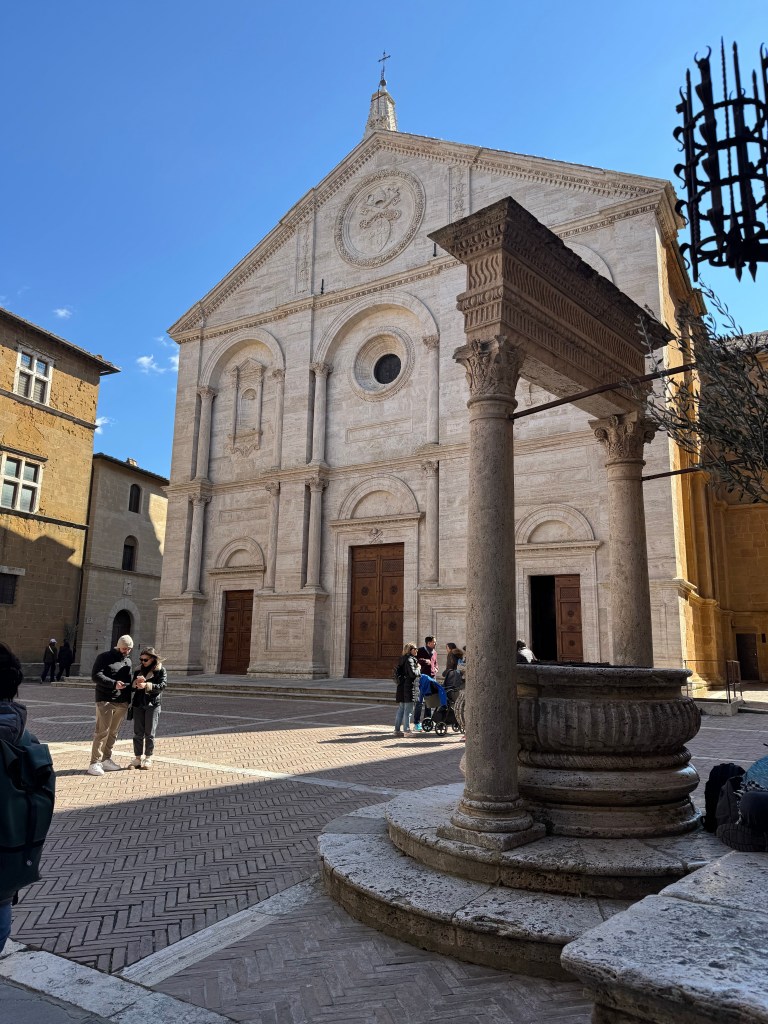
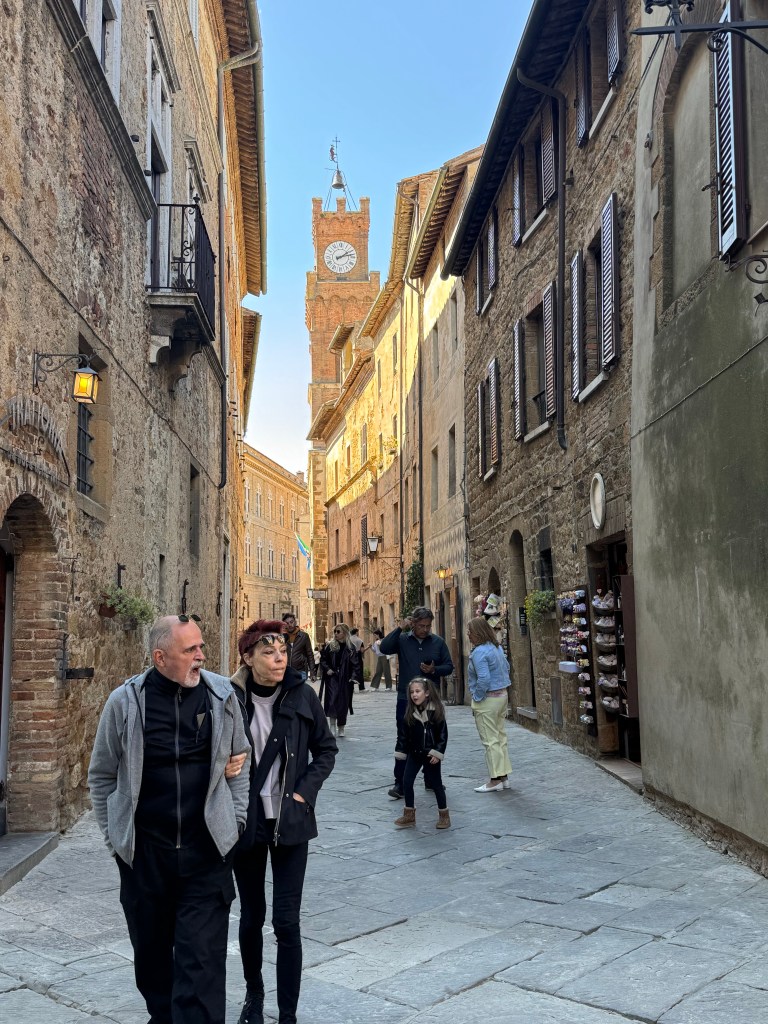
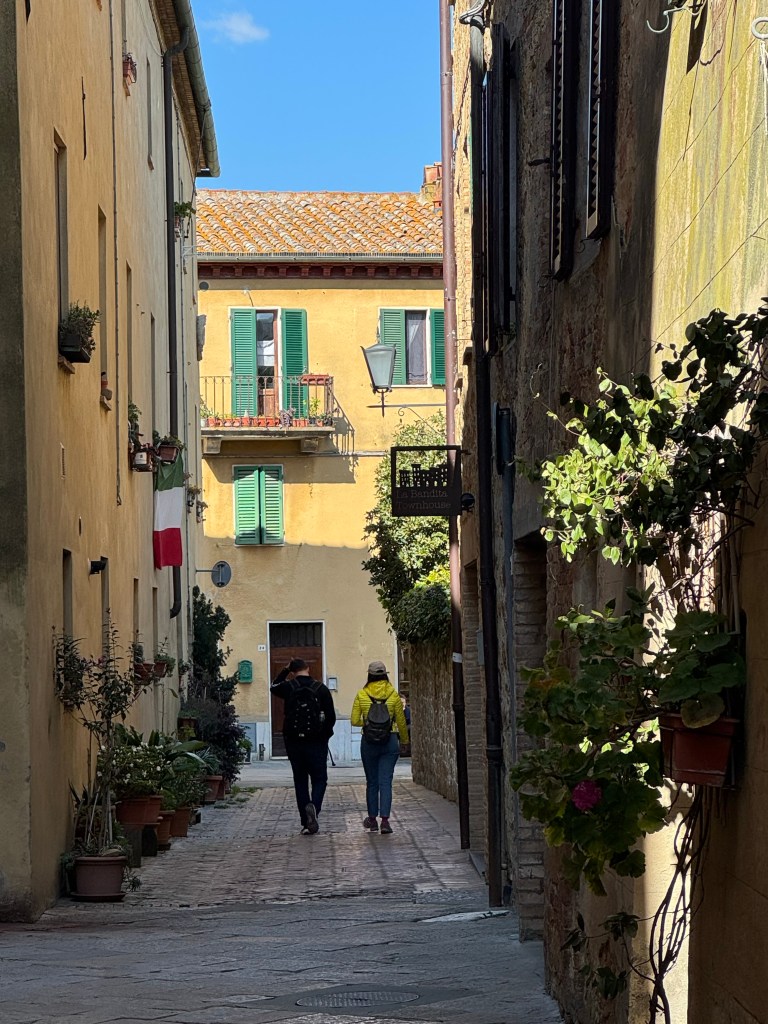
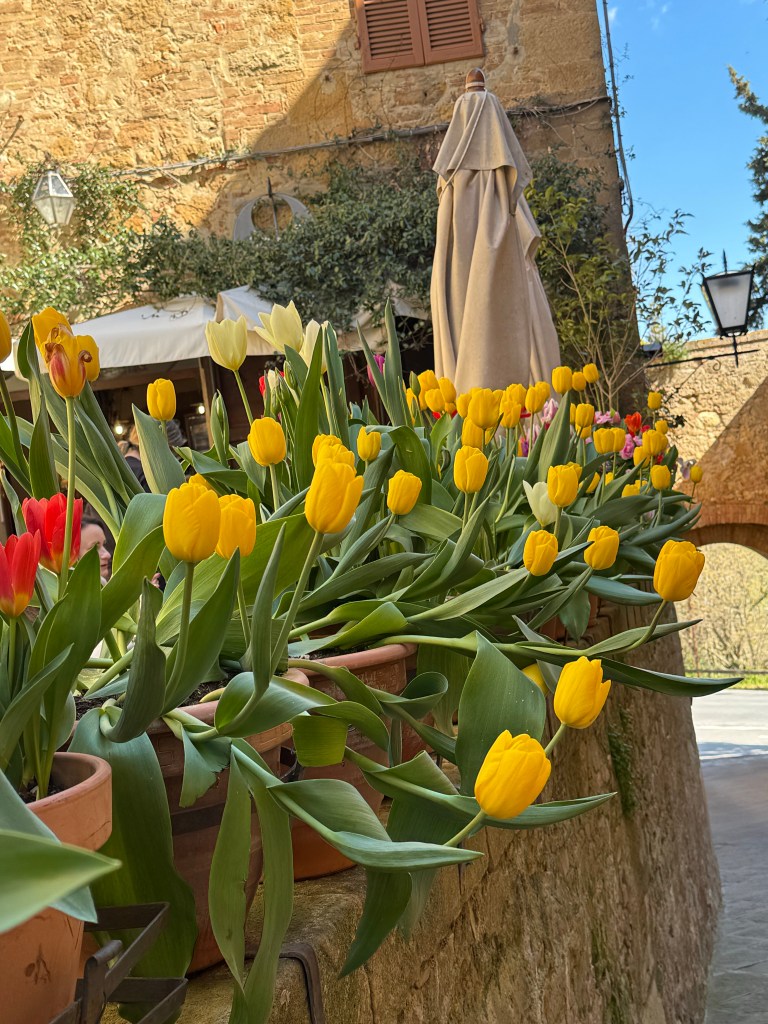
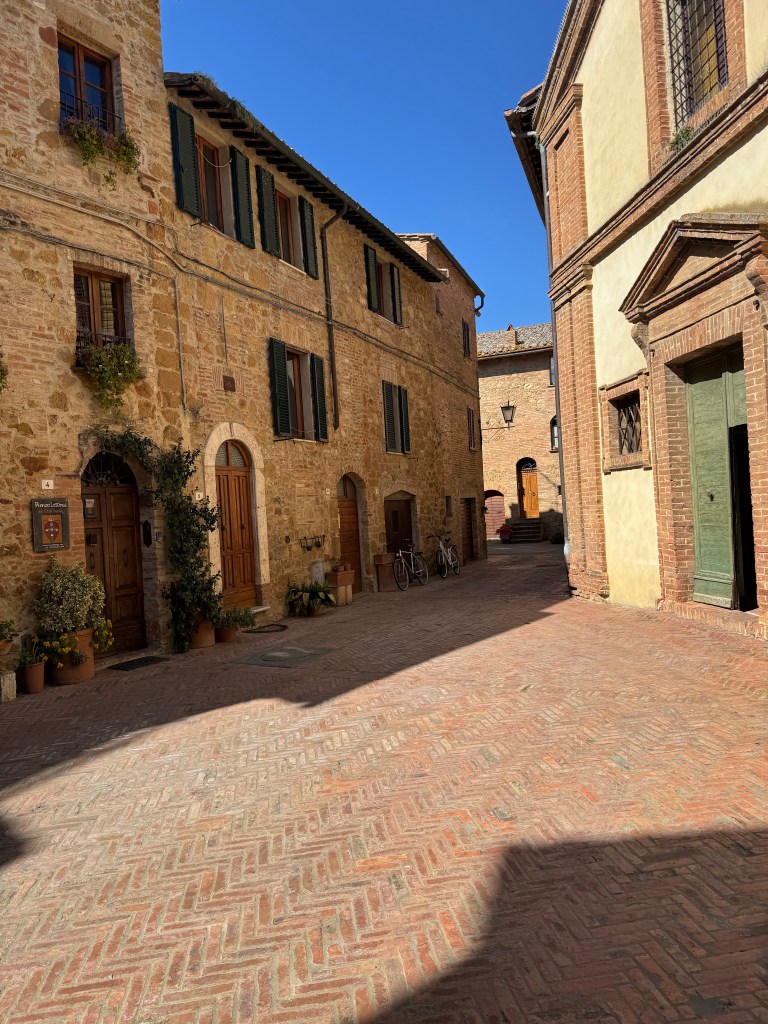
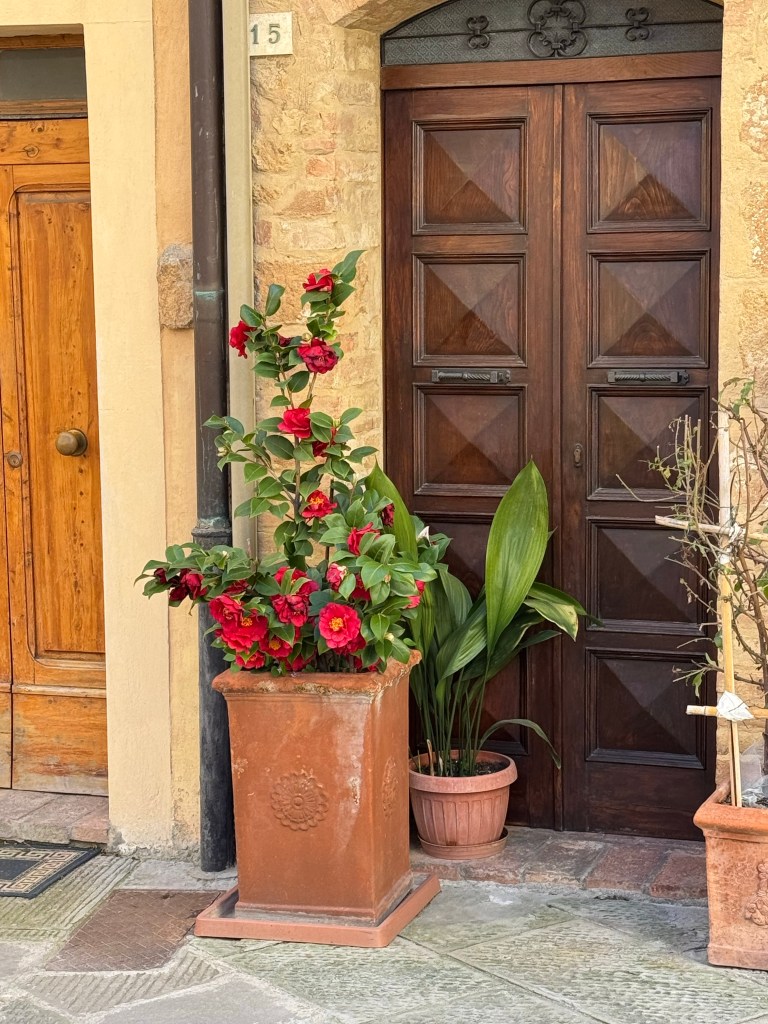
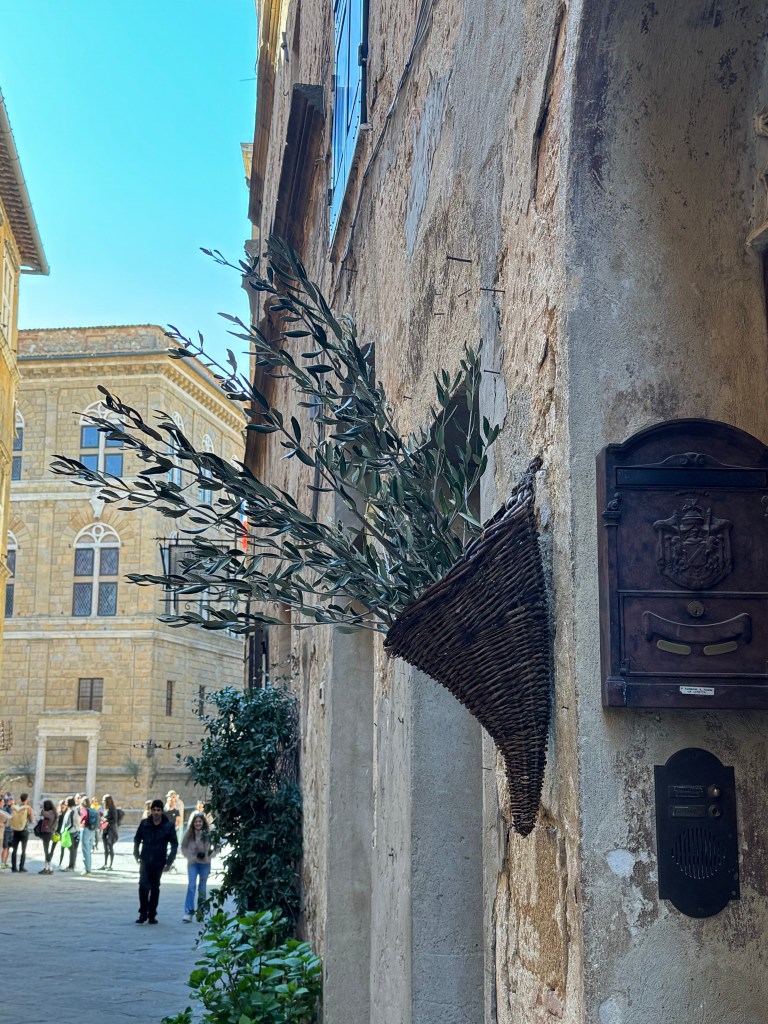
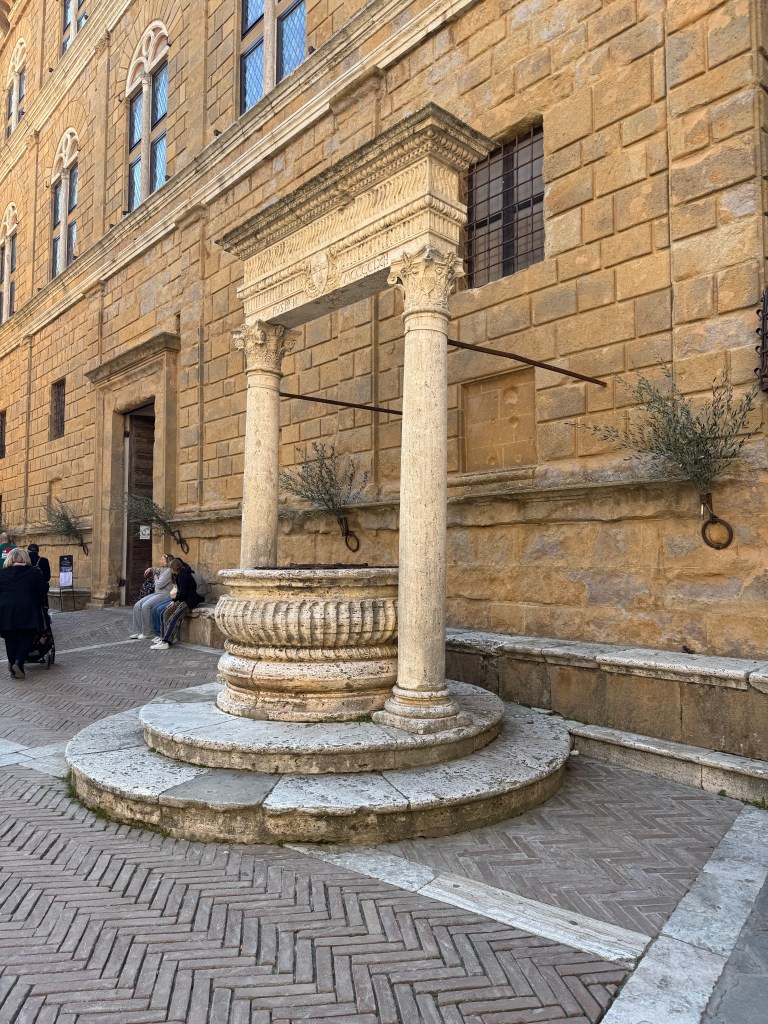
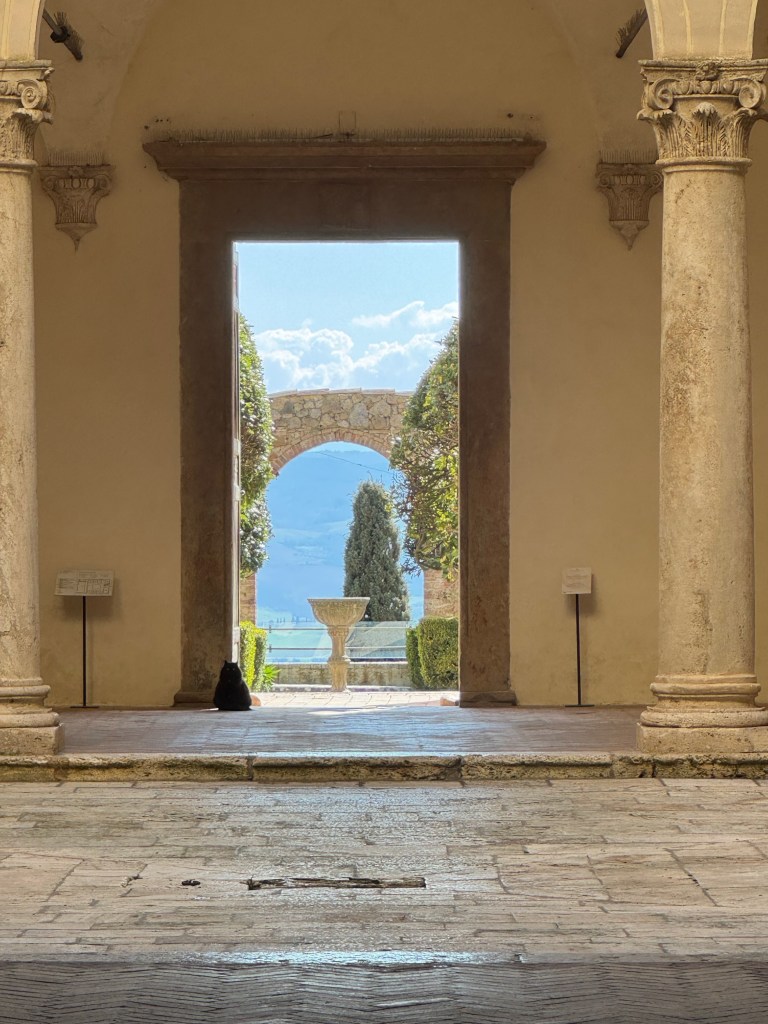
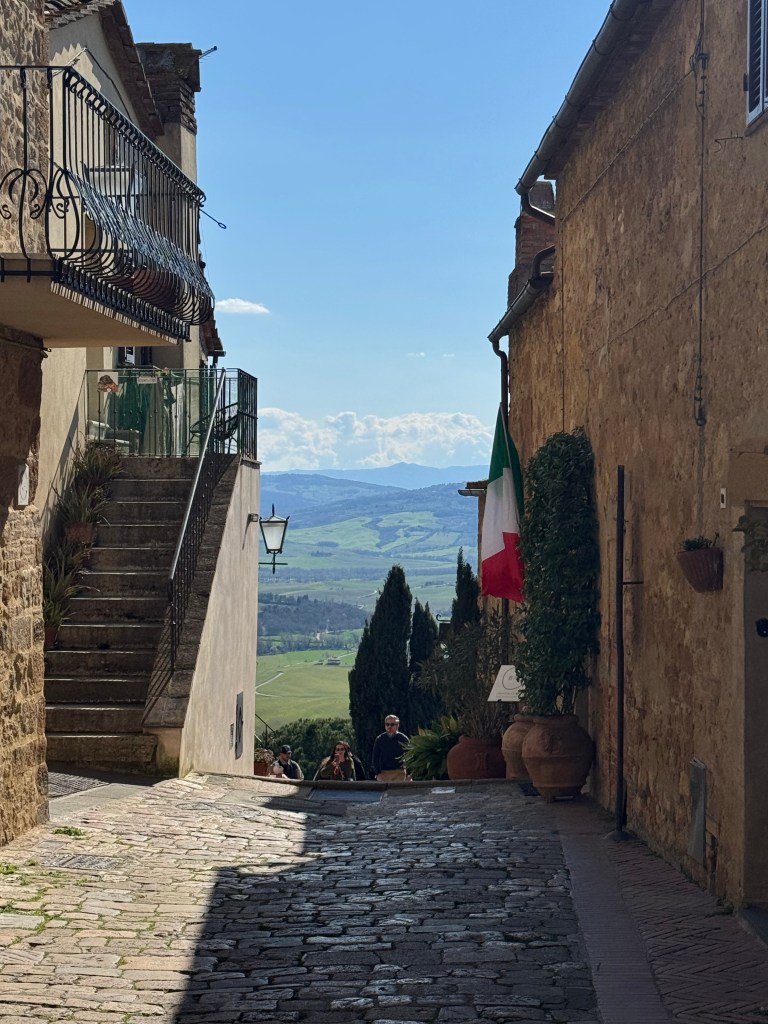
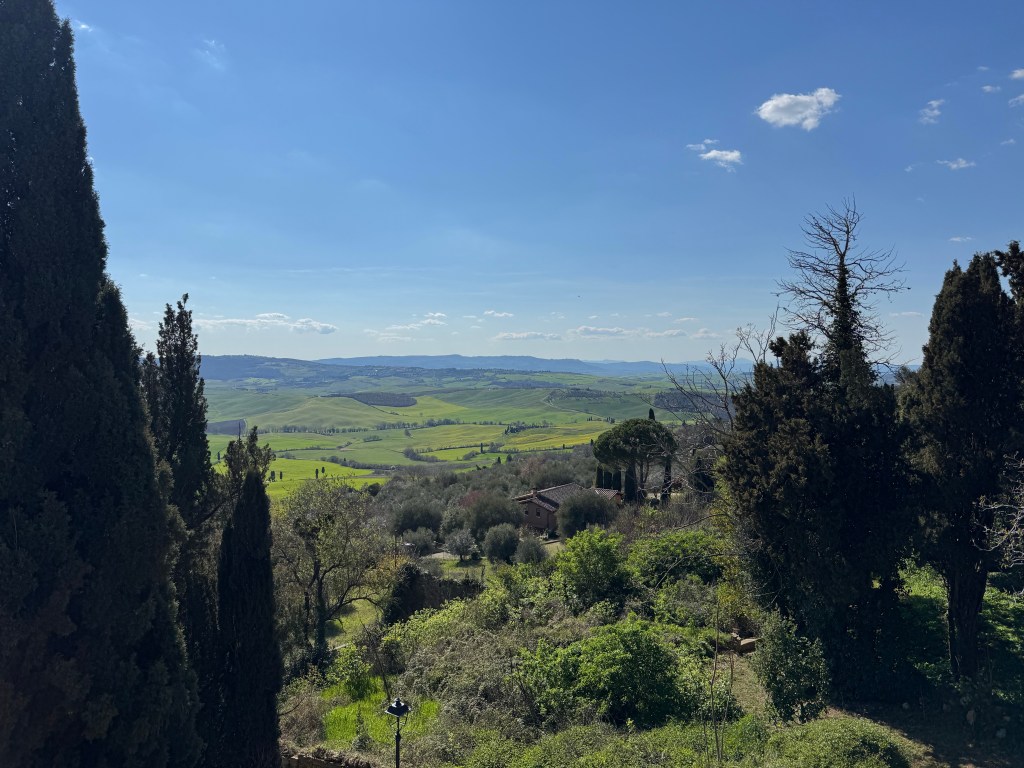
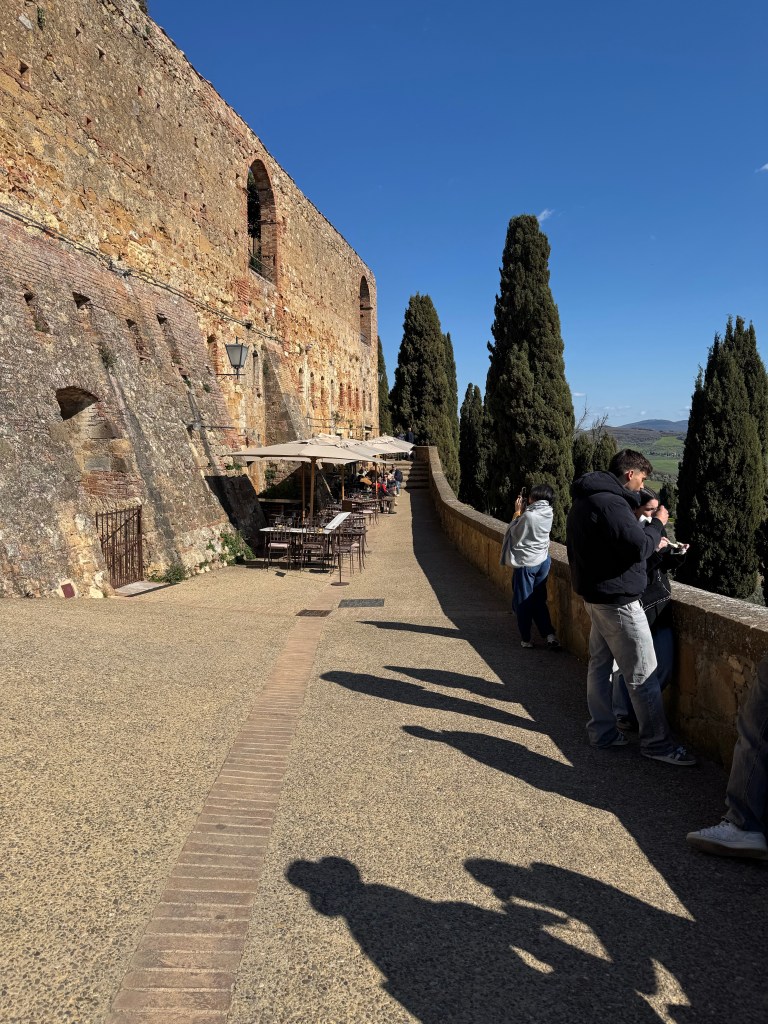
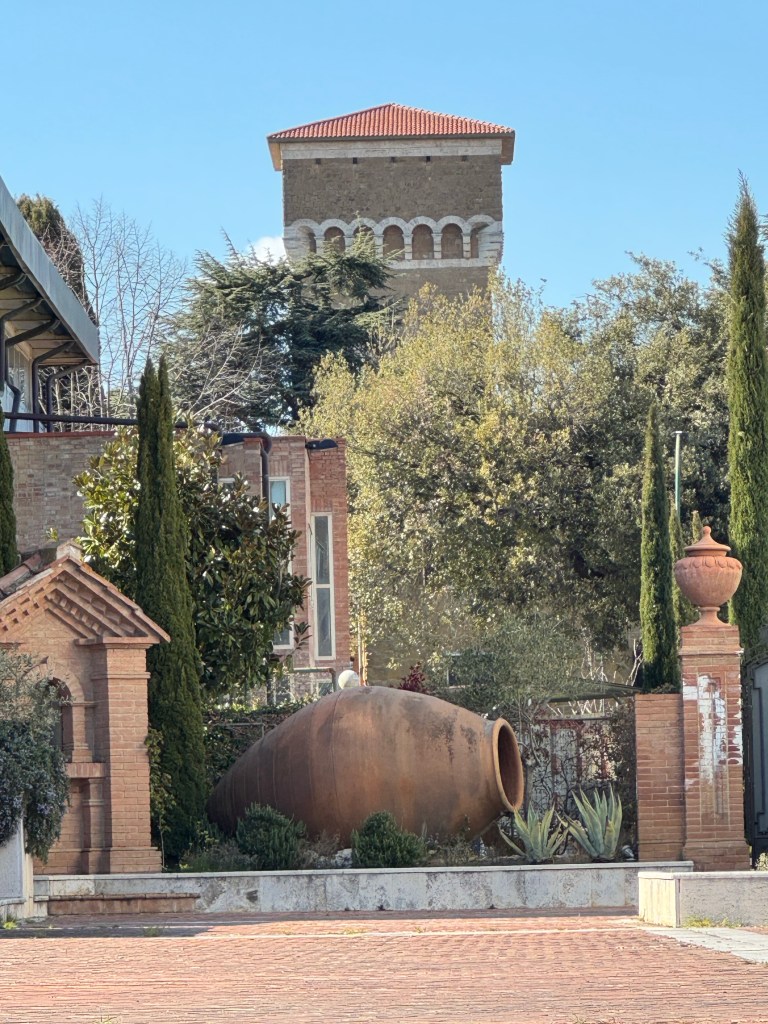
Saturday I took the local bus with a classmate to Pienza. It was easy, you can buy your tickets online. One thing to know, if you are standing at a bus stop and you see your bus, politely wave your hand to indicate you want it to stop. Even if there is not another bus due for 2-hours, it may drive right past you if you don’t let the driver know you want the bus. Pienza is another small town near Montepulciano, and it is worth a visit. We spent about 90-minutes walking around, and that is enough time to explore the historical center. The streets are narrow, there are many different side streets to explore. It gets busy with tourists, and you will find the “main street” has about 90% of the shops, gelaterias, cafes, and restaurants. If you want to have lunch with a view, there are a couple restaurants with spectacular views of the countryside, but you will pay for that view. The prices in the historical center reflect that it is a tourist area, and I doubt the quality of the food is any better than the tiny family run restaurant I ate at in Montefollonico last weekend, and paid significantly less for my meal. That being said, it is a lovely town to walk round and there are no hills, unlike the steep streets in Montepulciano.
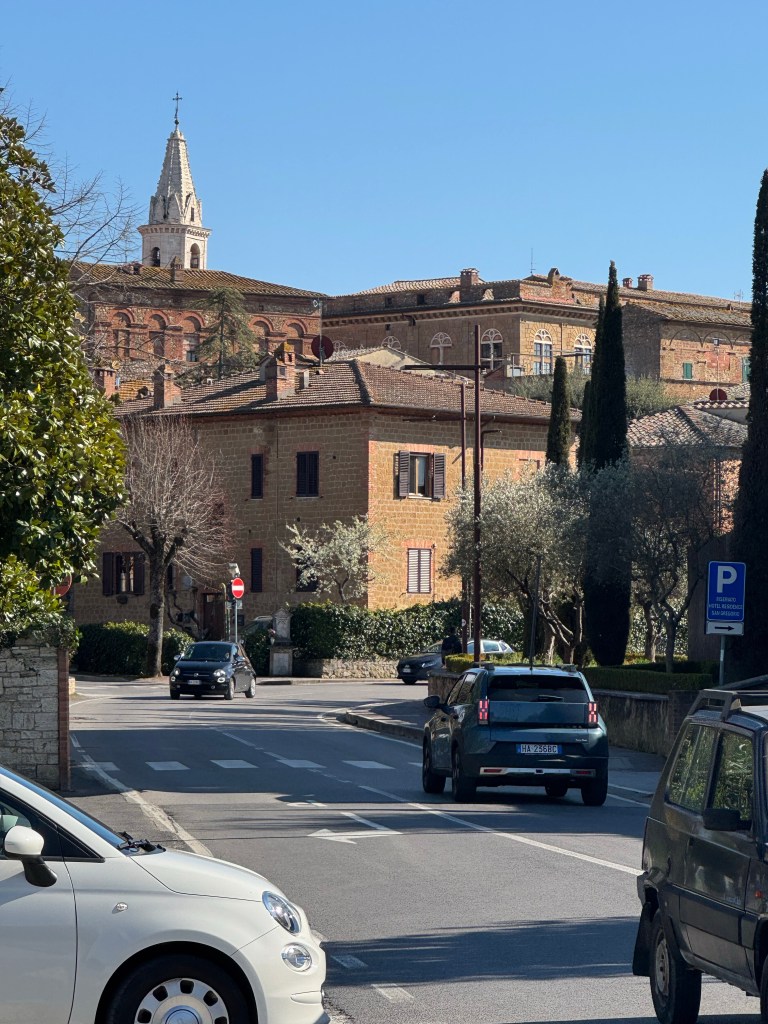
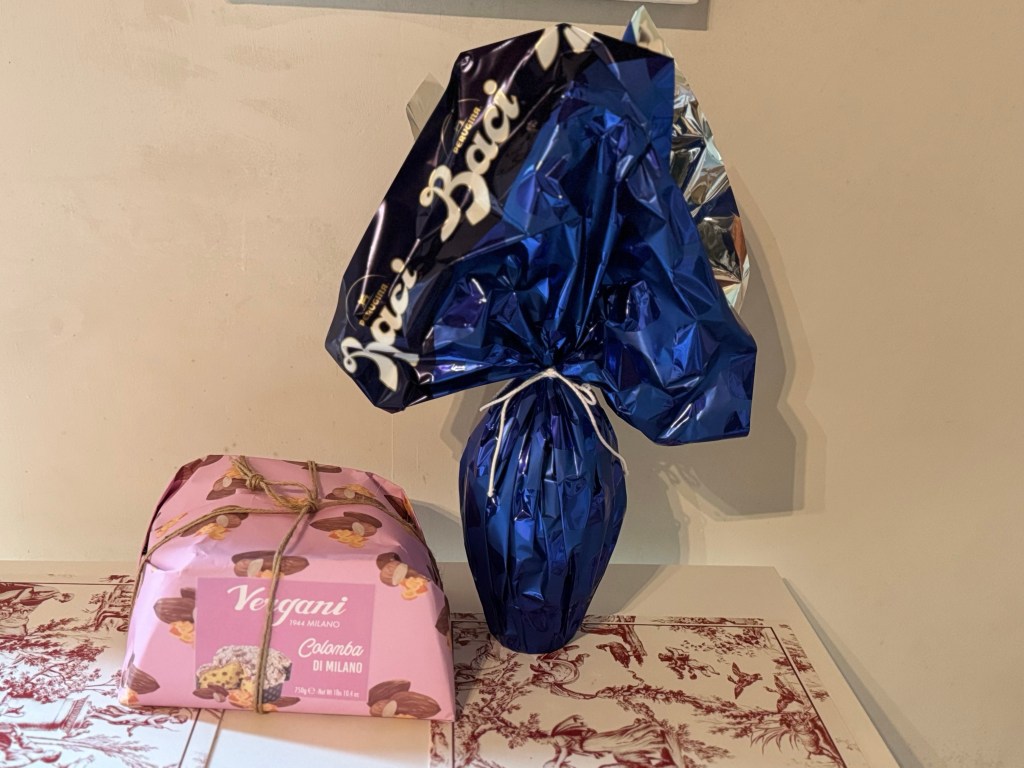
Next up is Palm Sunday mass in a church built in the 1500s, my third week of Italian classes, and more after school events. I’m excited for Easter here, there is a big musical festival in Montepulciano for two weeks beginning later in the week. I bought my big chocolate Easter egg and Colomba yesterday!
Ciao! 413 Girl 💕
 413 Girl Travels the World
You must be logged in to post a comment.