“A mind that is stretched by a new experience can never go back to its old dimensions.”
Oliver Wendell Holmes
La esperienza, or the experience. In Italy, Easter week, is a week full of experiences that you can’t miss.
Easter being the most religious day for Catholics, bigger than Christmas, is a week of religious celebration, food, delicious chocolate treats, and a time of reflection.
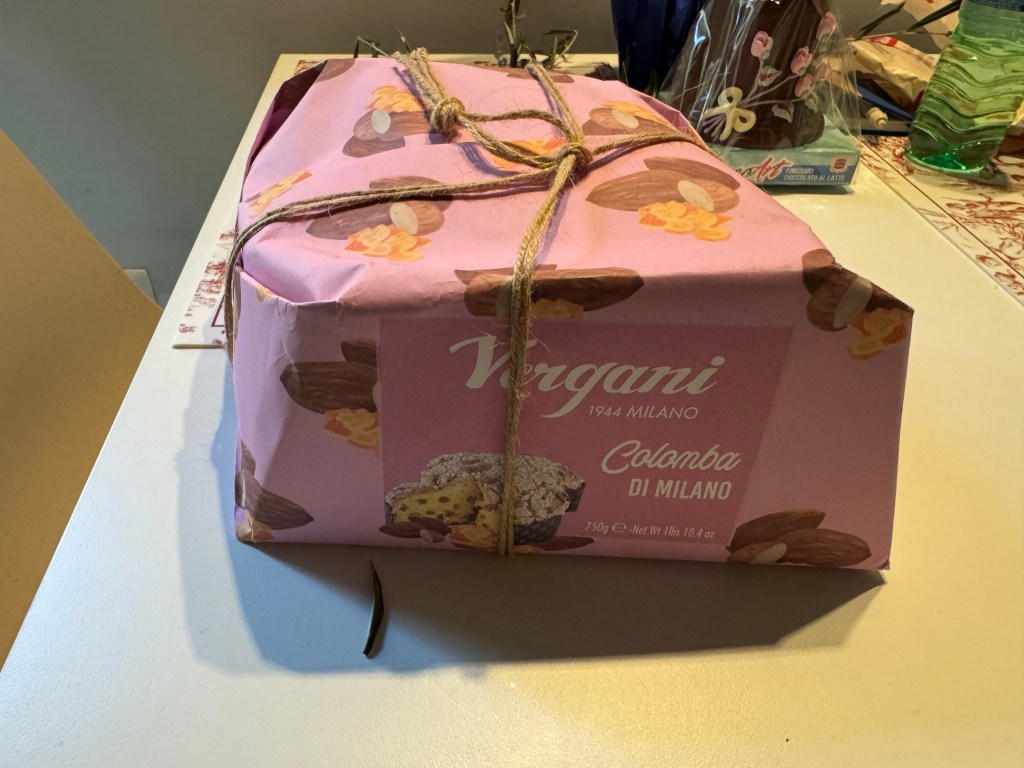
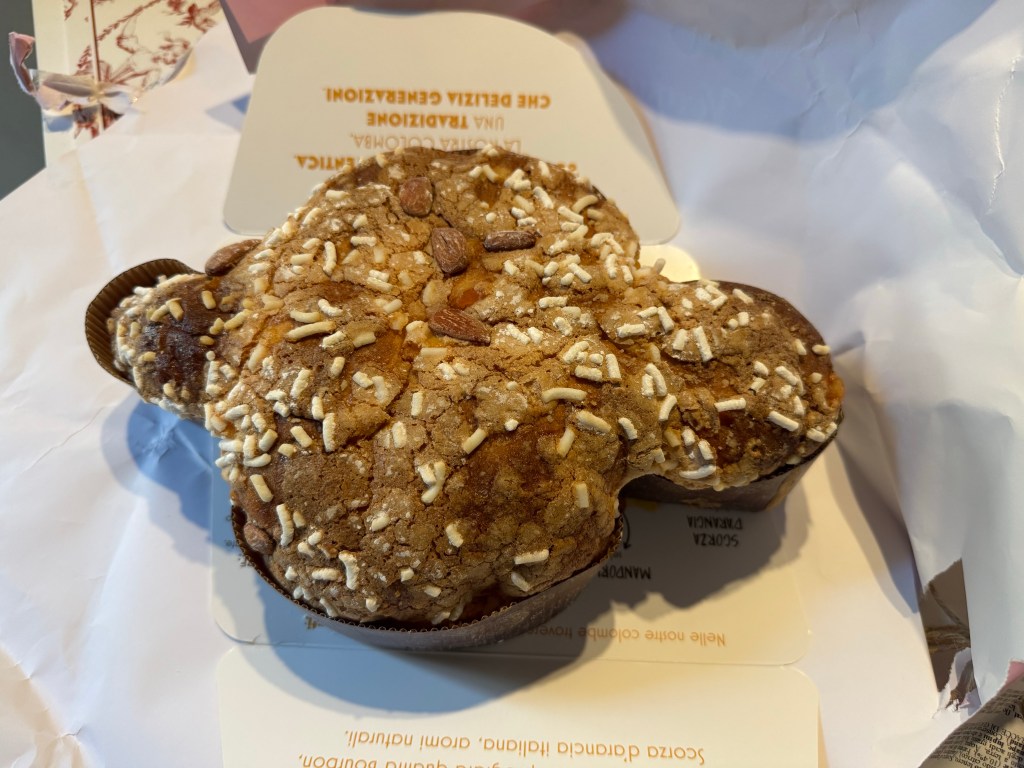
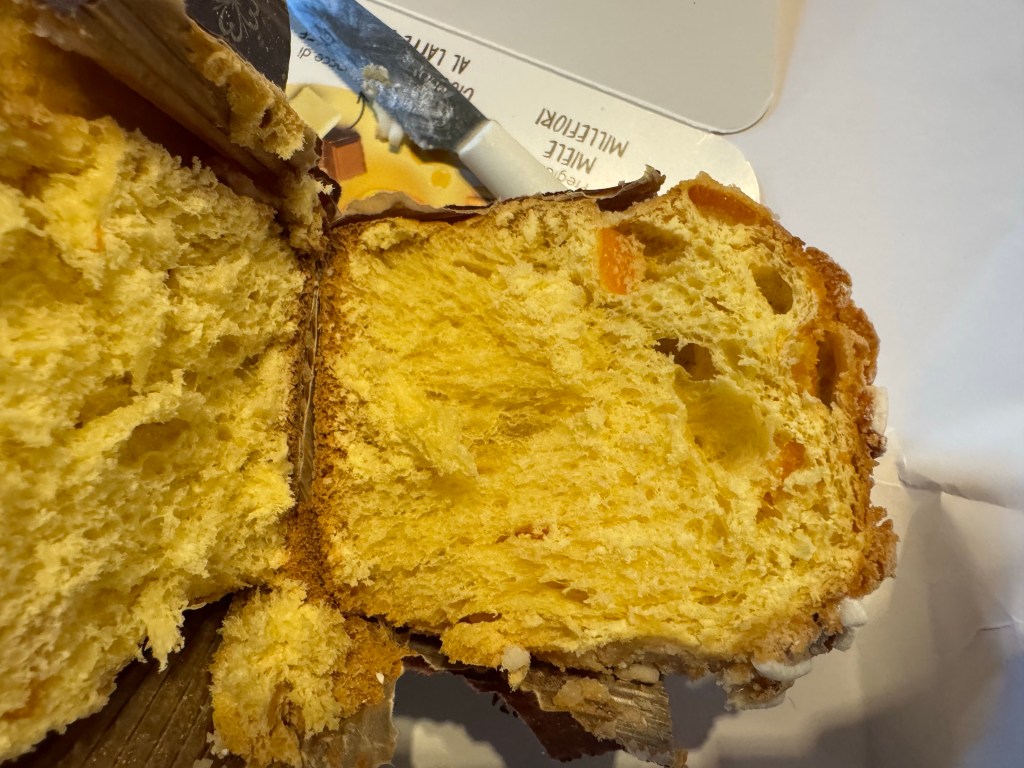
To prepare for the week I bought my big chocolate egg and a colomba at the market. Colomba pasquale or colomba di Pasqua is the traditional Easter bread in Italy. The dough used is similar to that of its Christmas cousin, panettone. La colomba, the dove, is shaped like a dove, and inside is candied oranges. The top is sprinkled with pearl sugar and almonds before it’s baked, but unlike panettone there are no raisins. Nowadays you can find many flavors of colomba in the markets, chocolate, pistachio, etc, but I wanted a traditional one.
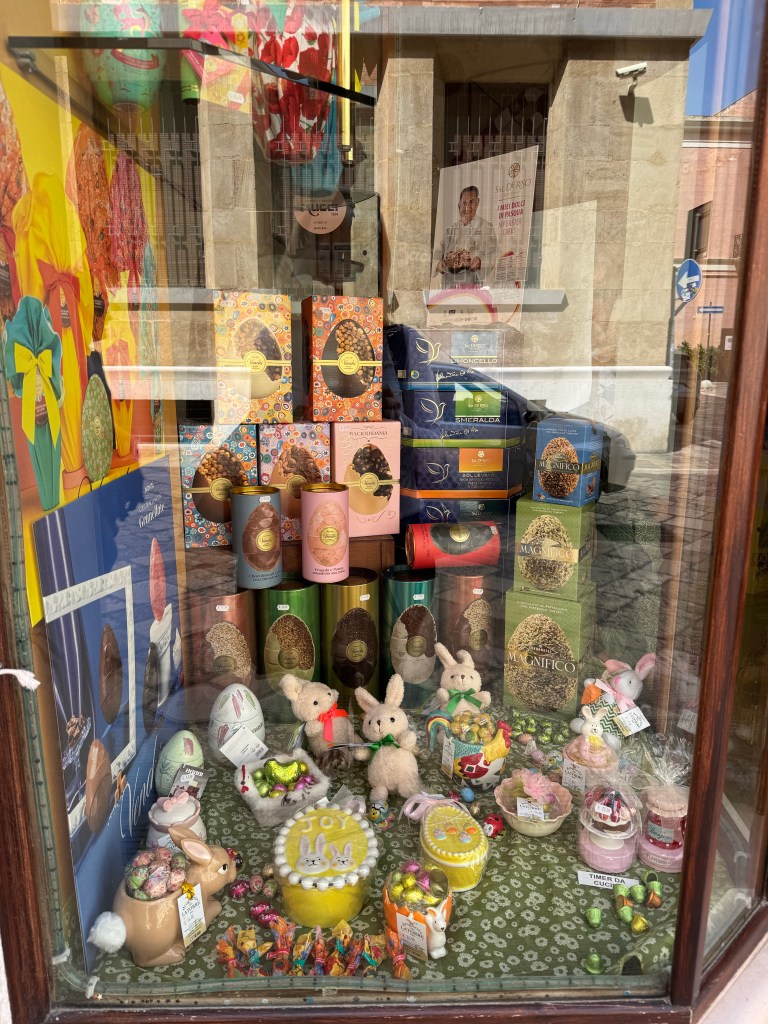
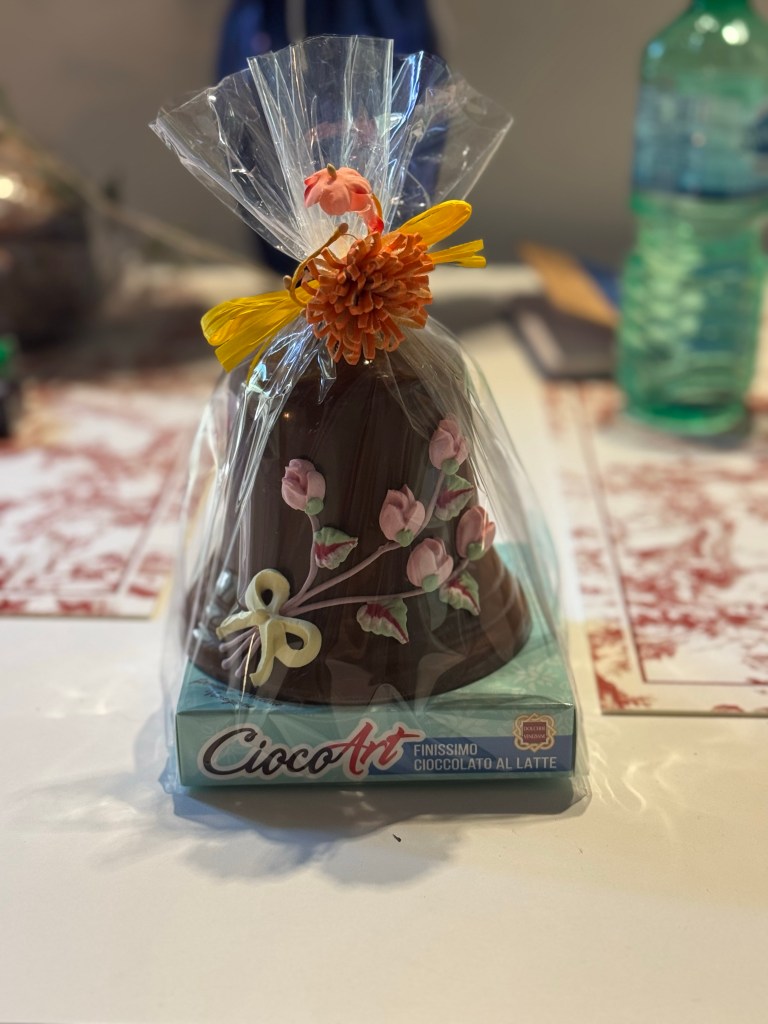
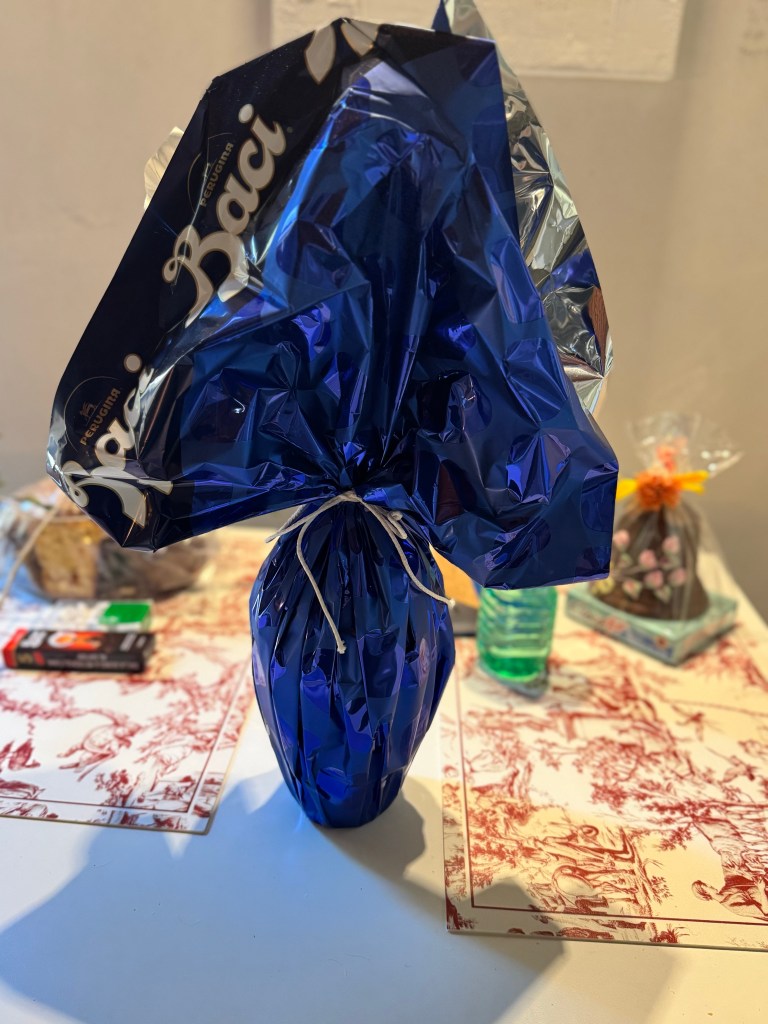
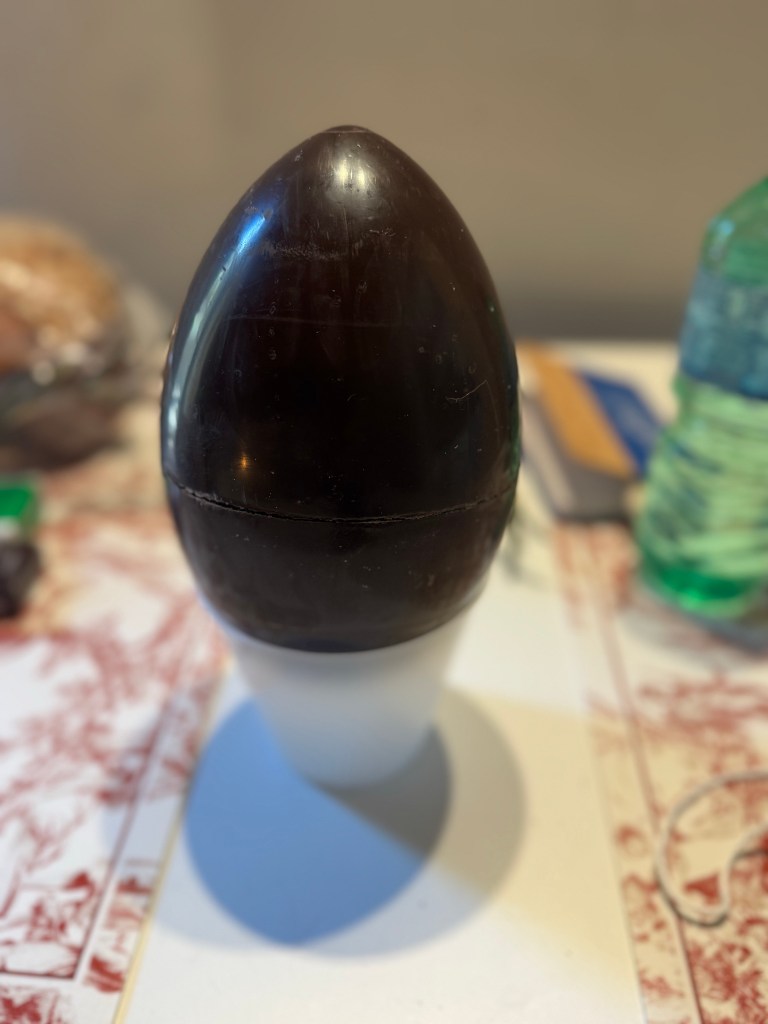
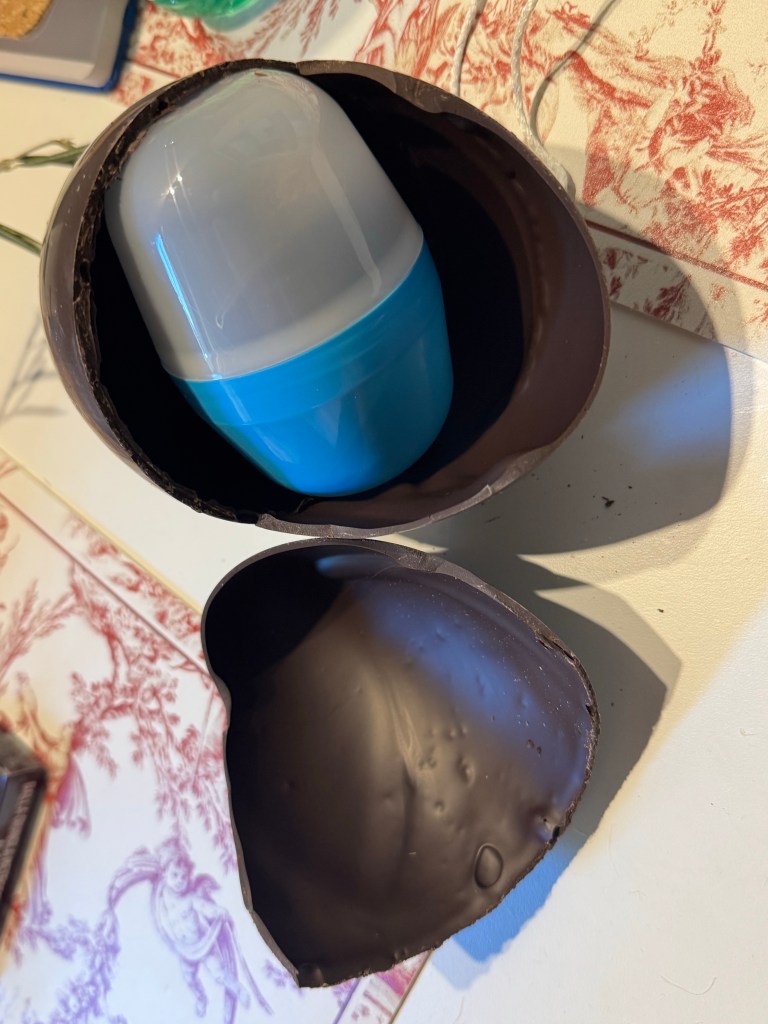
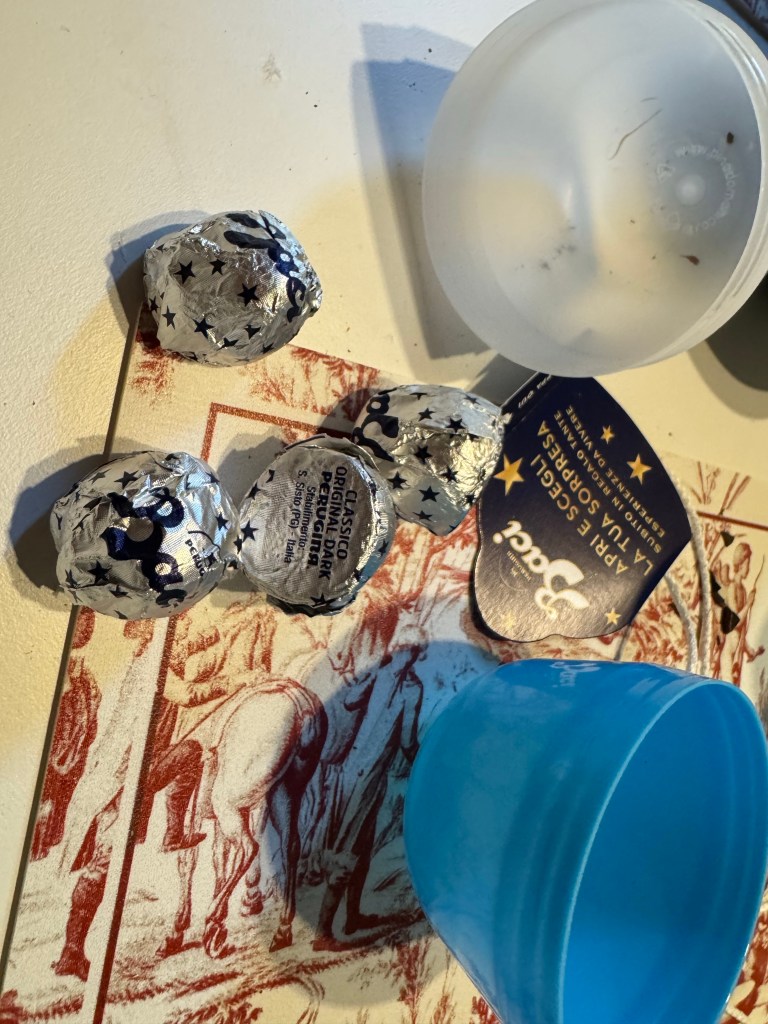
The selection of chocolate eggs in the stores is insane, so many to choose from. Personally, I think these are so much better than the traditional hollow rabbit you get in the States. Why? In the center of the egg there is a surprise! It could be a toy, more chocolates, other types of candies, and some high profile influencers have managed to get the chocolate companies to market eggs with make-up and other products inside. Some men even have a chocolatier put an engagement ring in them. The eggs made by professional chocolatiers are works of art, and can be enormous. I should have taken photos of the one’s I saw in Matera last April. There is not a chocolate shop here, so I can’t show you just how magnificent they are. I chose a simple Perugina dark chocolate egg with 4 individually wrapped Baci inside – treats within a treat!
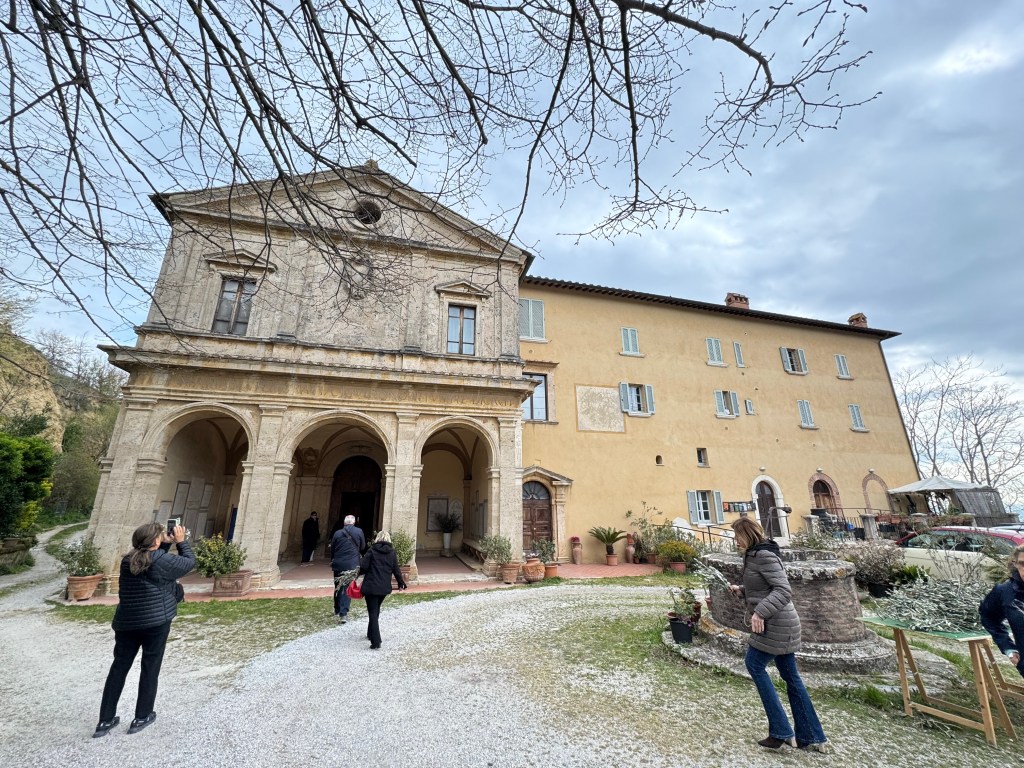
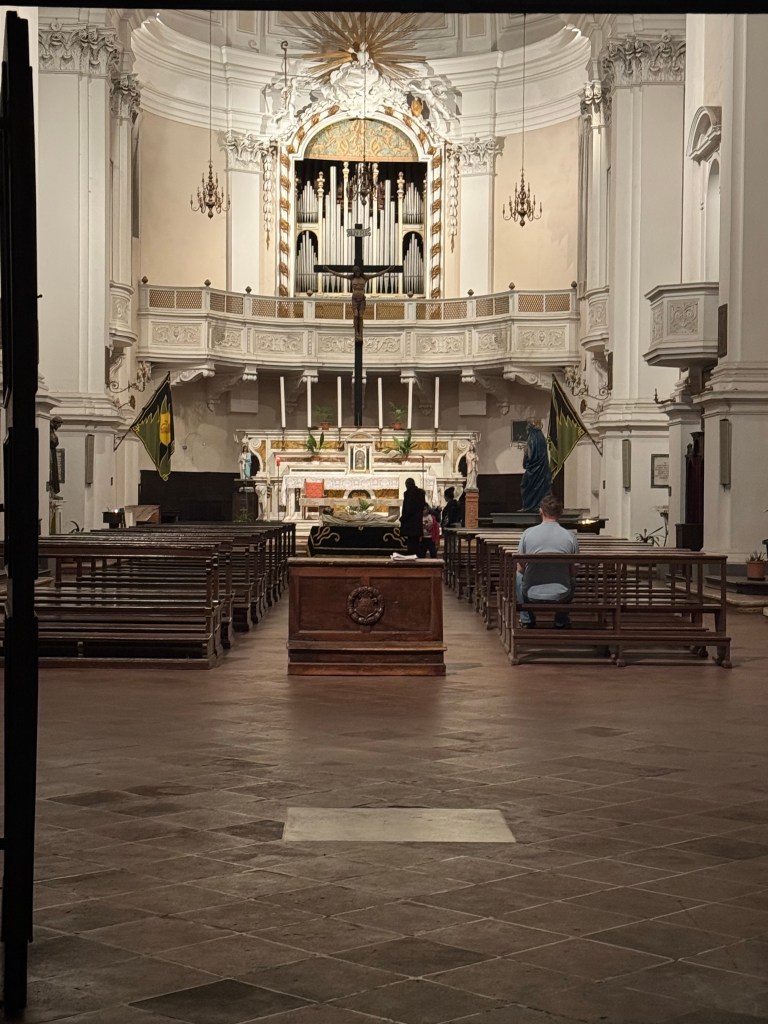
Last Sunday I attended Palm Sunday mass or Domenica delle Palme with a friend from school. We went to mass at Chiesa di Santa Maria delle Grazie. It was built on land that was given to the Carmelites in 1561, and was finally consecrated in 1741. I wanted to take photos of the beautiful inside, but when we arrived, the church was full and mass was ready to begin. The church is rich in history, and I read it was built after a wall image of the Madonna located at the entrance of the property, bled after it was stabbed by an angry man after losing money gambling in 1514, and when the blood was being removed later on, they say the wounds reopened and bled again. They played the pipe organ in this small church, and the organ pipes, still working, date back to the early 1700s.
Palm Sunday mass was a bit different here. Italy does not have many palms, so the priests bless olive branches, and you take them from the table after the blessing. Some people arrived with large bouquets of branches to be blessed that would then be placed either in or outside their homes for the Holy Week.
Easter week is a four day weekend for many Italians. It starts on Good Friday and ends on Monday, Pasquetta, or little Easter. If you plan to visit any town during this period, you need to make reservations early, especially for meals. My peaceful, tranquil village turned into a town with crowded streets and restaurants posting signs they were full for all meals. Pasquetta is a day to spend with friends and family with a barbecue or picnic, although I heard it typically rains on Pasquetta, this year, the forecast is for sunny skies in Montepulciano. The people will be happy.
On Good Friday many towns in Italy hold a procession for the stations of the cross, or Via Crusis, Way of the Cross. It is a procession through the town in which the stations commemorating Jesus’ final hours are reflected upon. You may have seen in the news that Pope Leo carried the cross through all 14 stations at the Colosseum in Rome. I decided I would be a participant in the Via Crusis procession in Montepulciano.
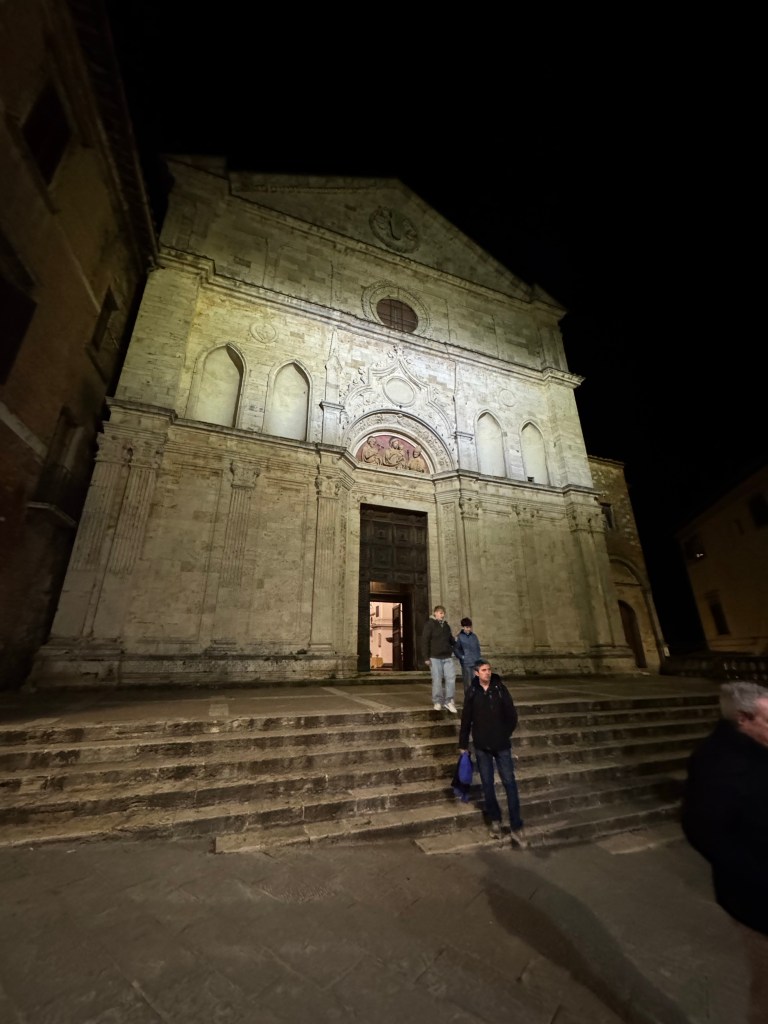
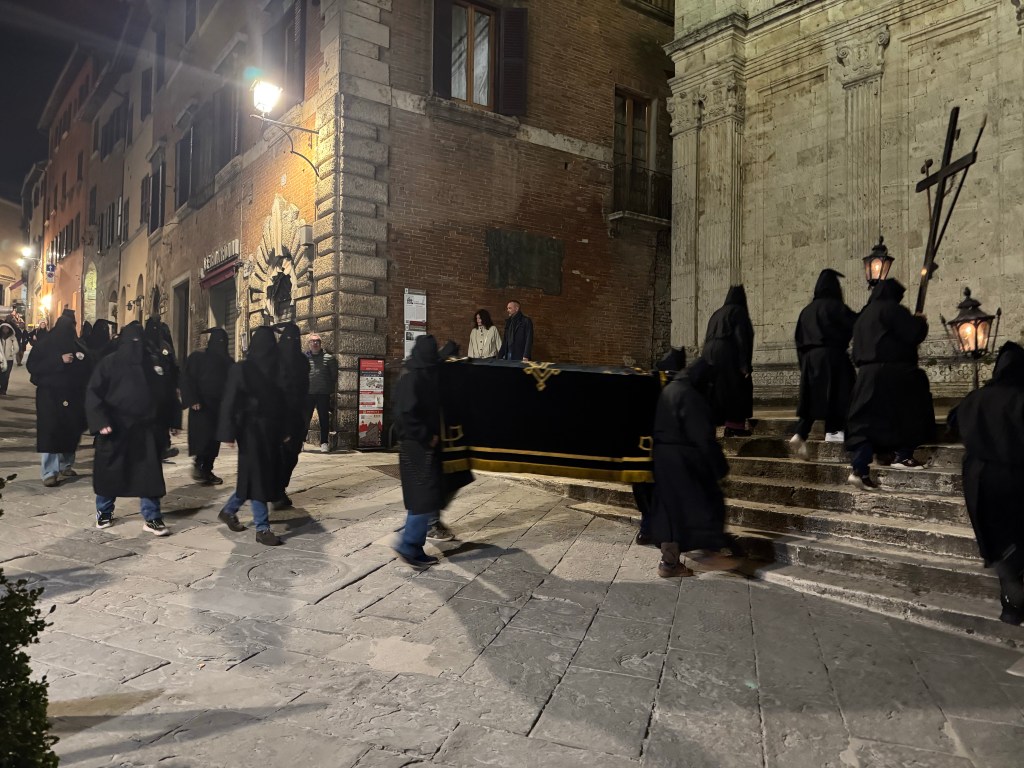
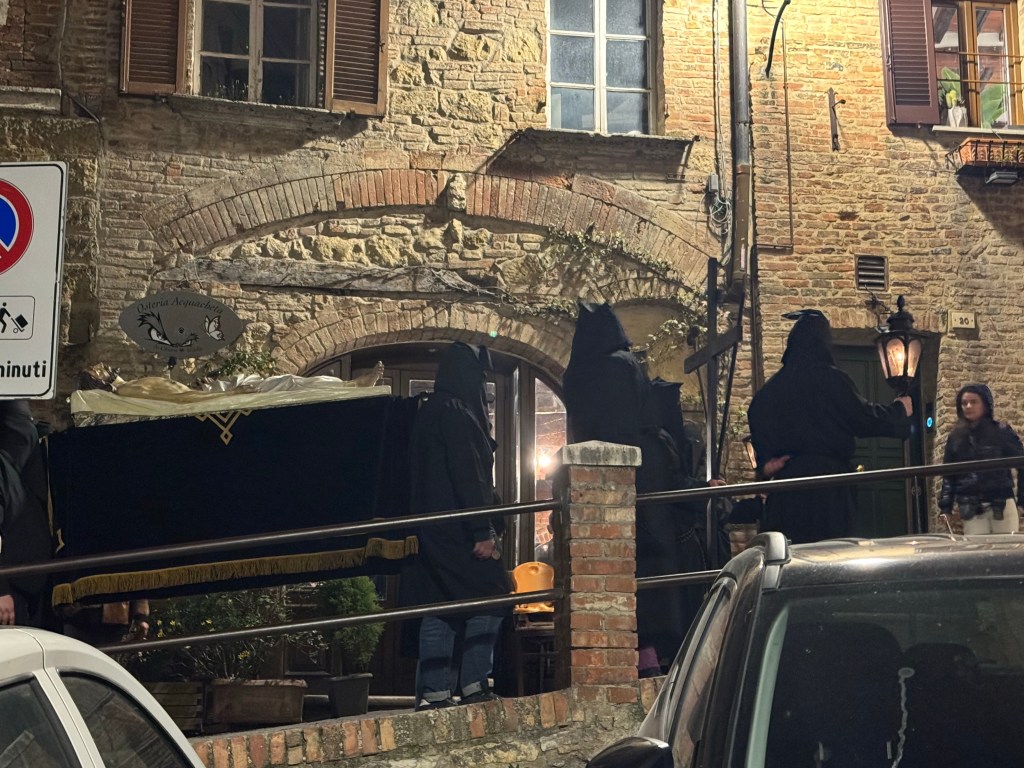
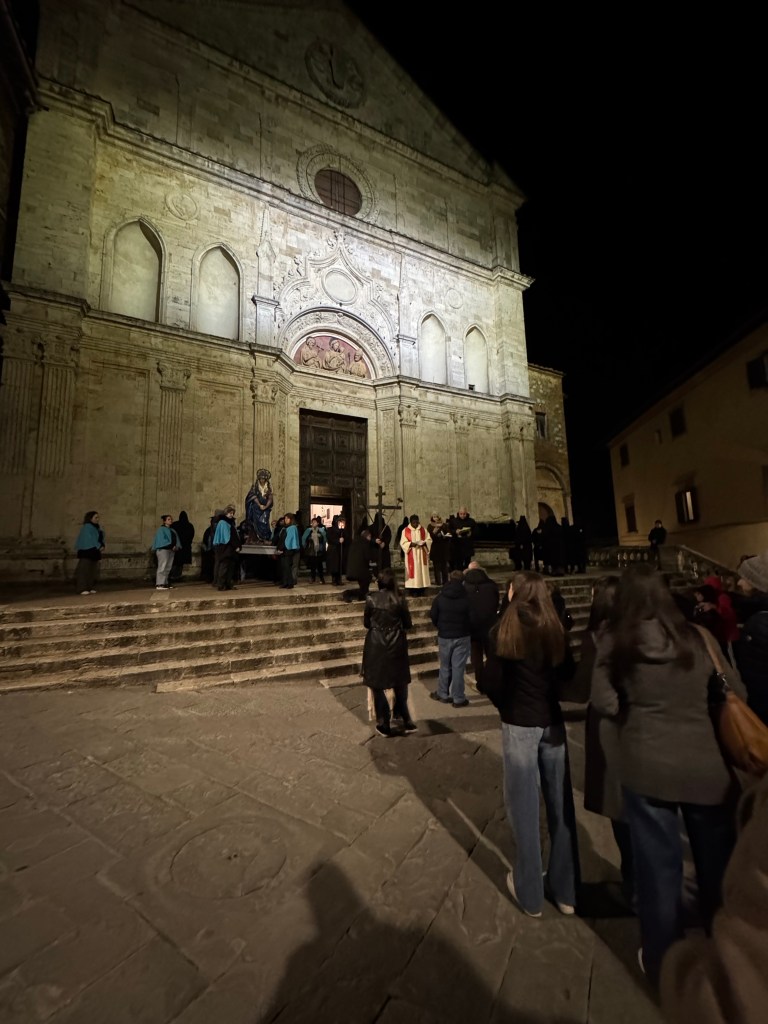
Here they had a simple procession that began at Chiesa di Sant’Agostino, originally founded in 1285 and renovated in the 18th century. The procession began with a statue of Jesus arriving in a coffin covered in black, carried by men dressed in black robes and hoods. I learned the black robes symbolize mourning and patience, signifying Jesus’ suffering and death. The hoods are called capirote, keeping the participants anonymous, but not in the way you may be thinking, politically, but rather as a symbol of humility before God, and not allowing one member of the brotherhood to standout amongst his peers.
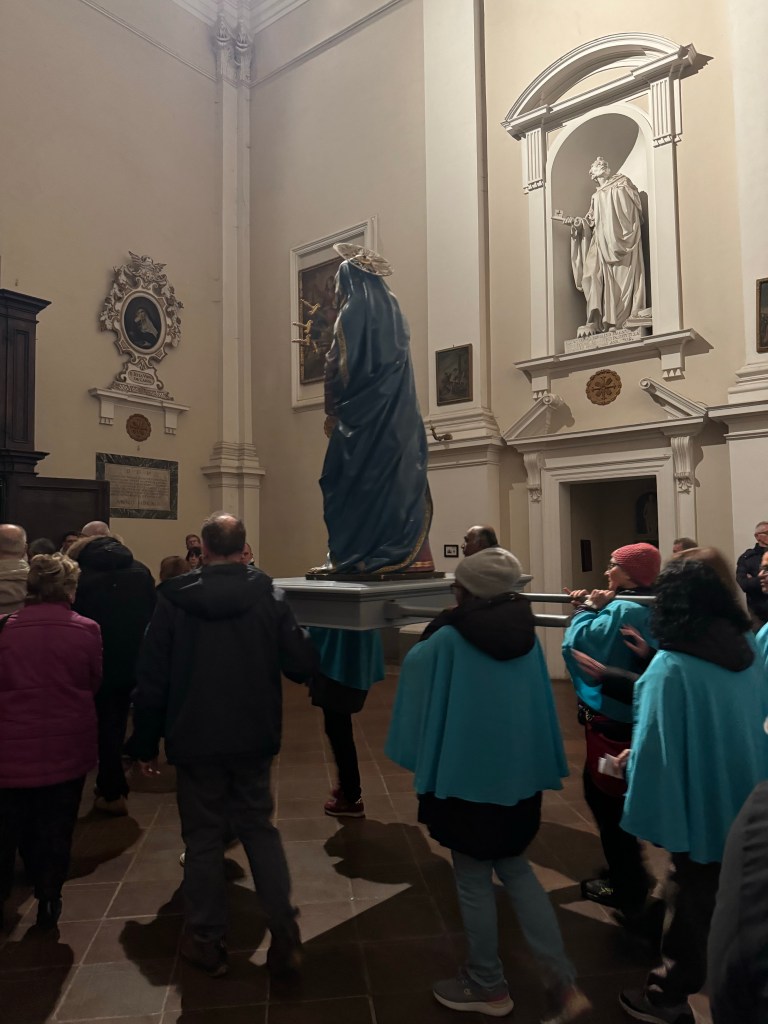
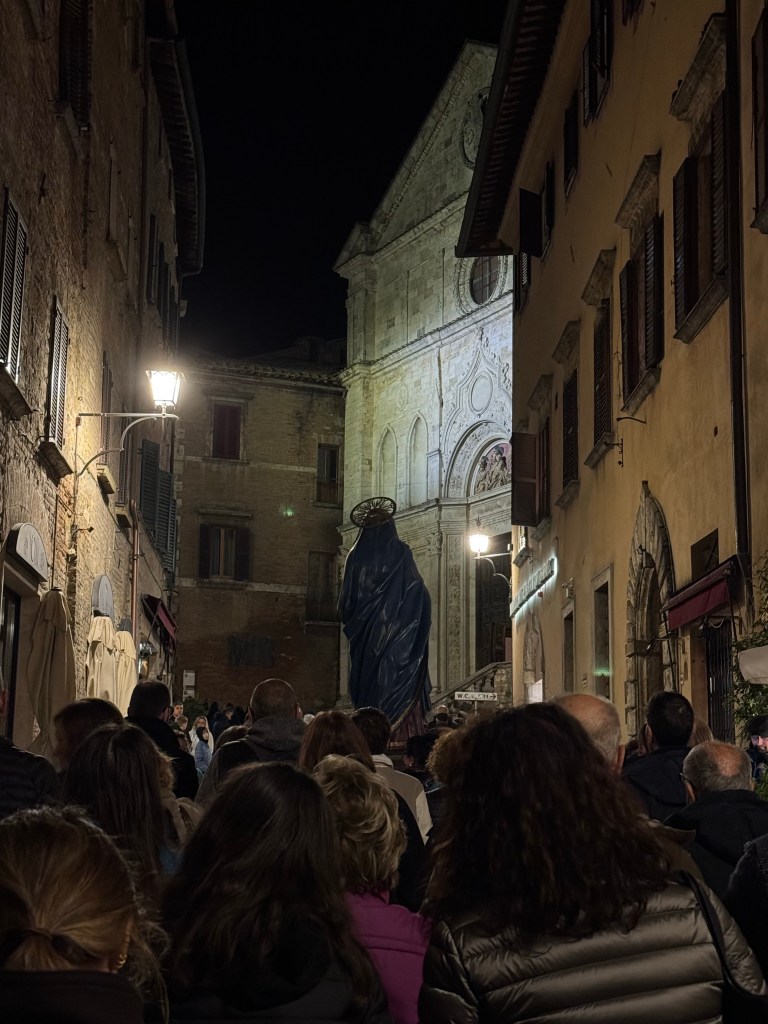
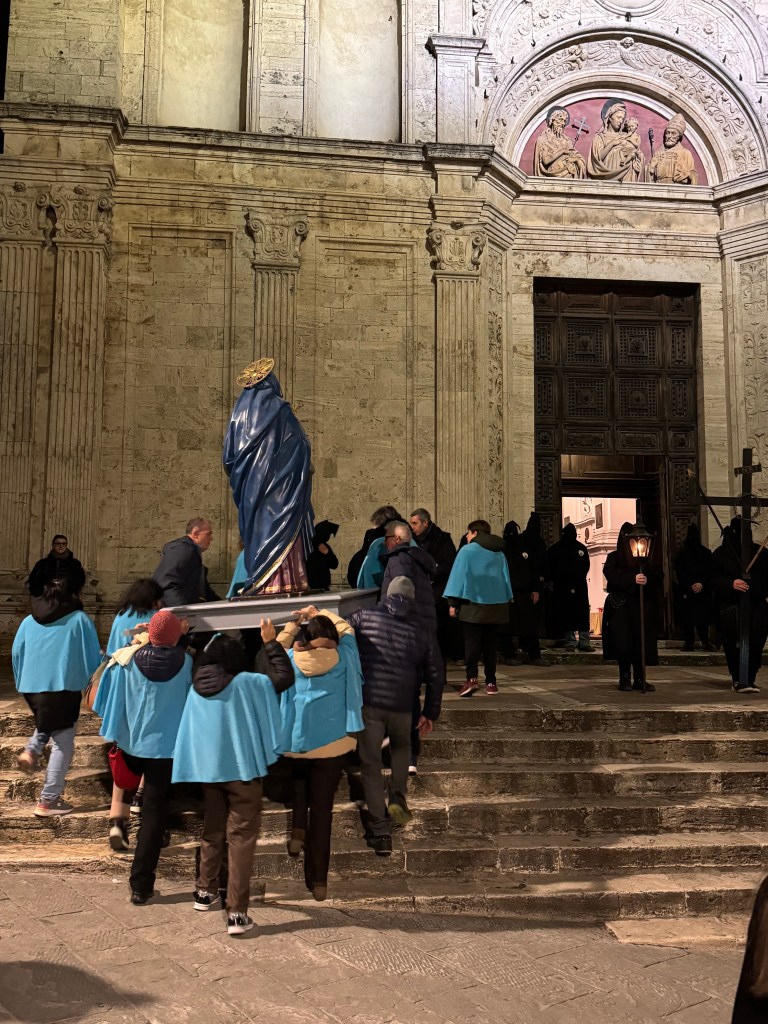
The Madonna, or in this case the Madonna Addolorata, Our Lady of Sorrows, is considered one of the most powerful and emotional statues of the Virgin Mary. The statue of the Virgin Mary had seven daggers in her chest, each symbolizing key moments of her deep suffering as the mother of Jesus. The final dagger symbolizes the burial of Jesus. This statue was carried by women cloaked in black and blue capes.
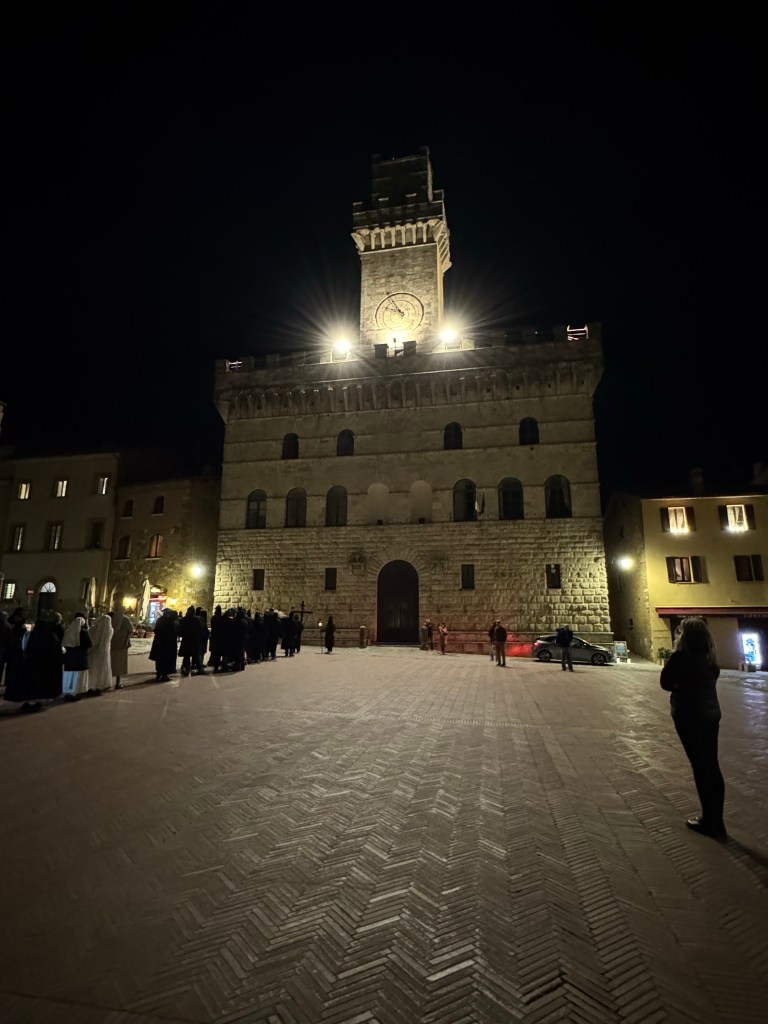
The procession took about two hours, and it was both equally beautiful and somber. The procession stopped at various points in town, each stop corresponding to one of the 14 stations of the cross. At each stop, the priest recited the station, then we moved on again, slowly, and the people of the town sang the traditional songs sung only for the Via Crucis. The songs are passed down from generation-to-generation. It was an amazing experience.
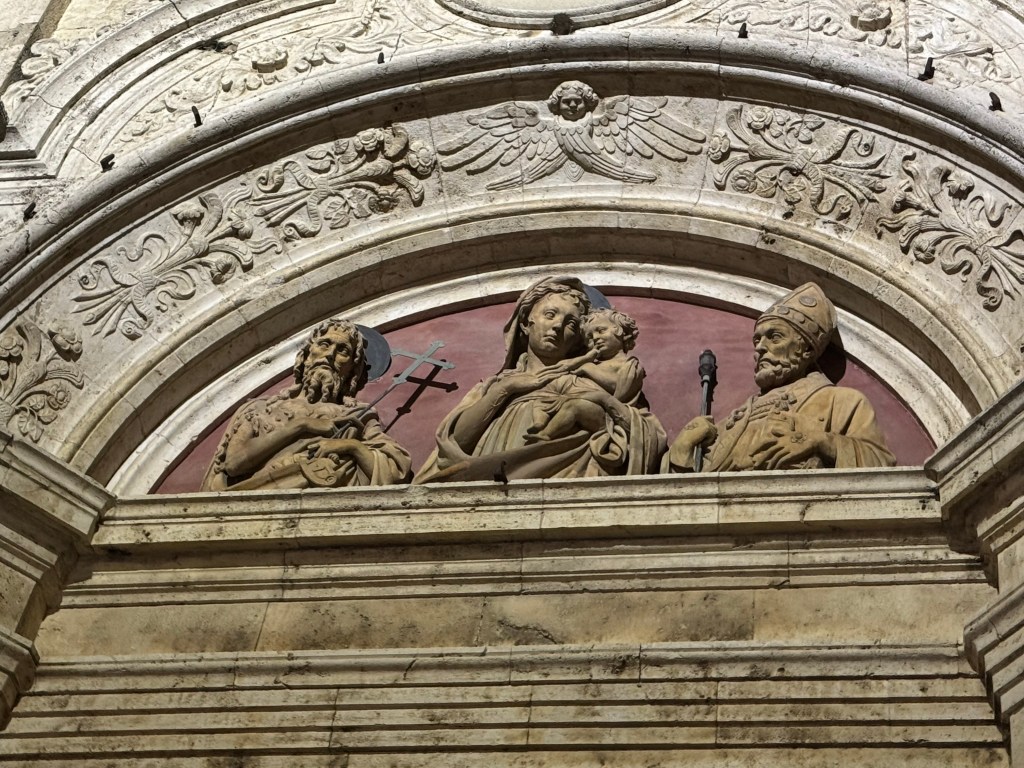
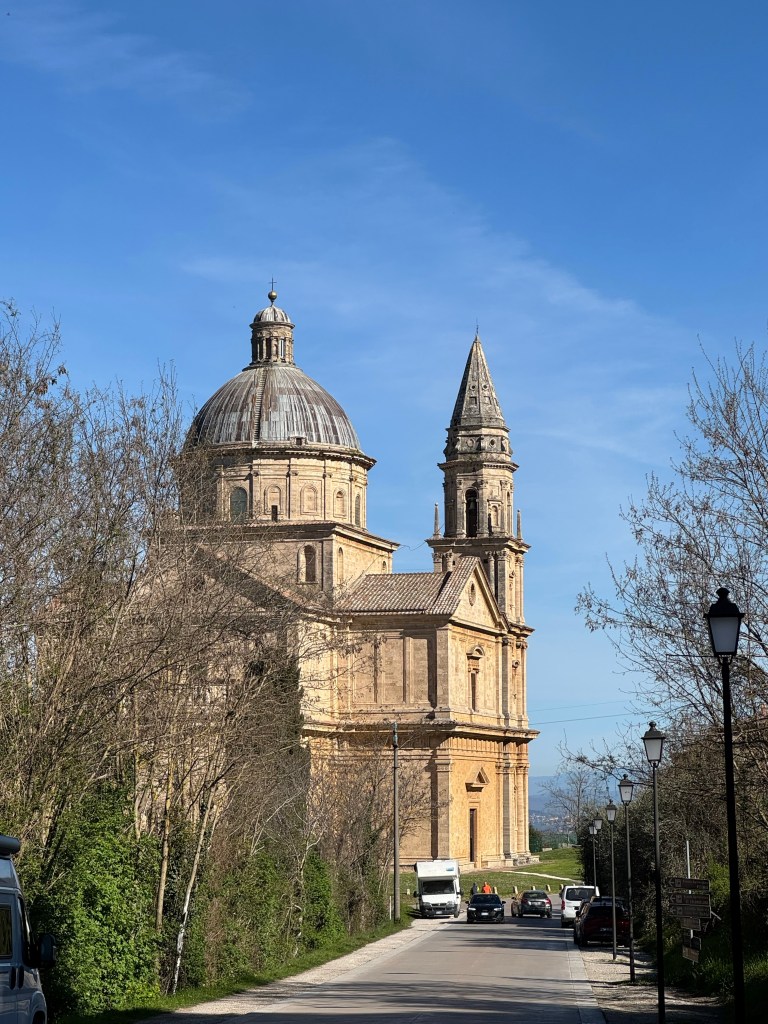
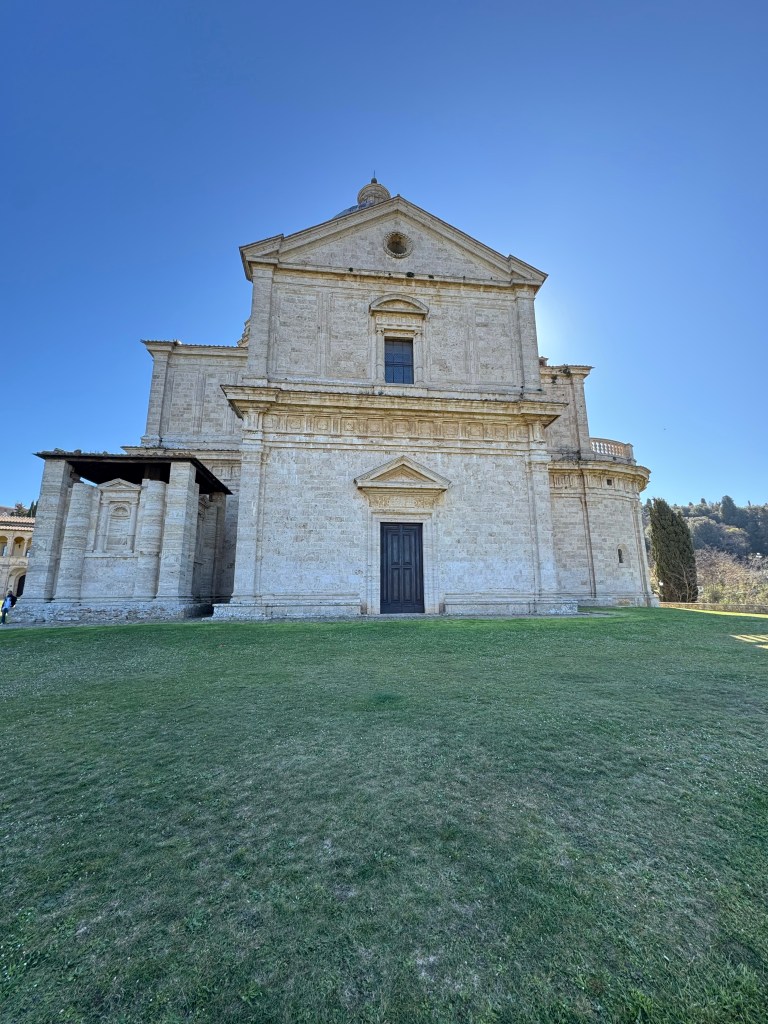
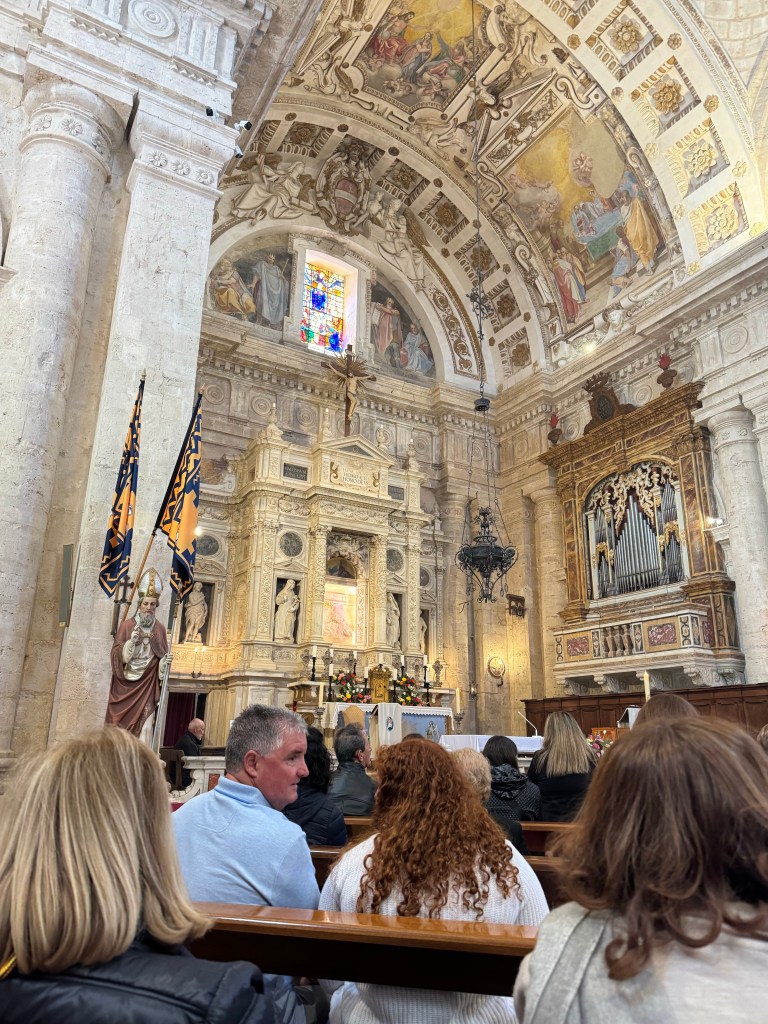
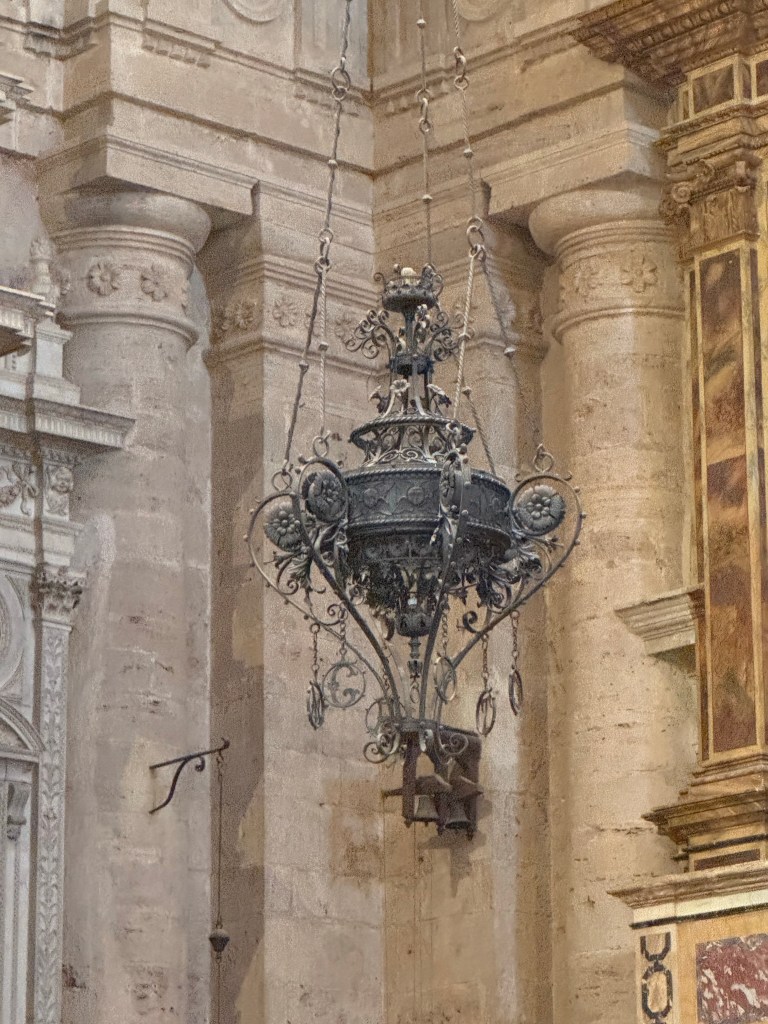
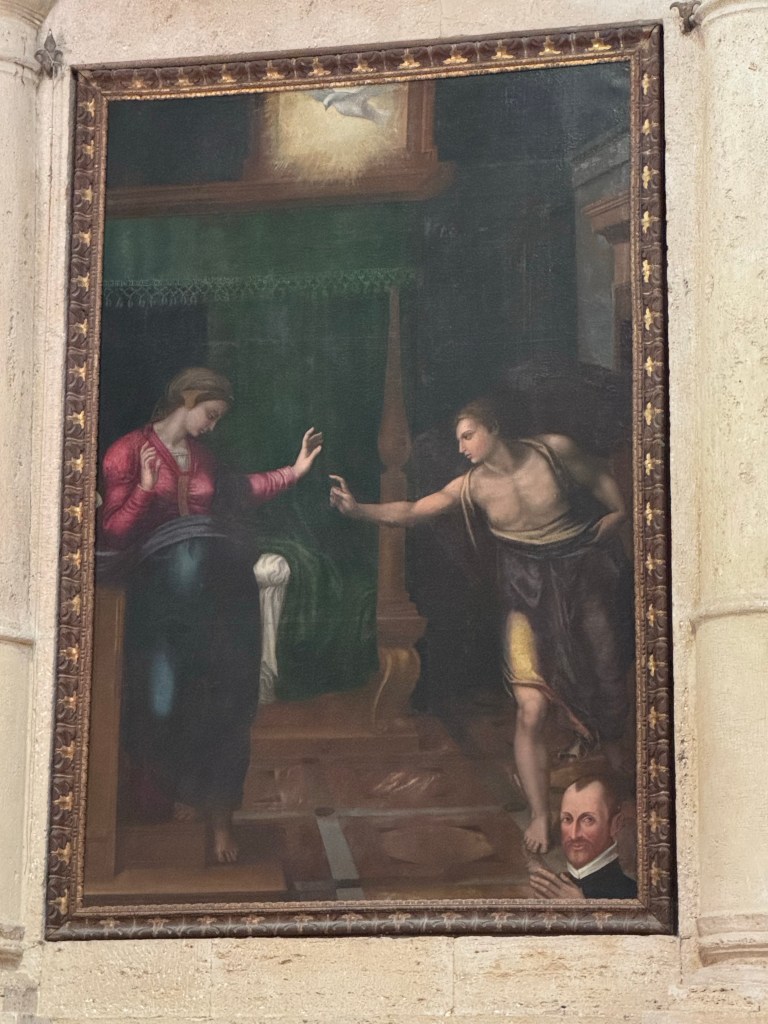
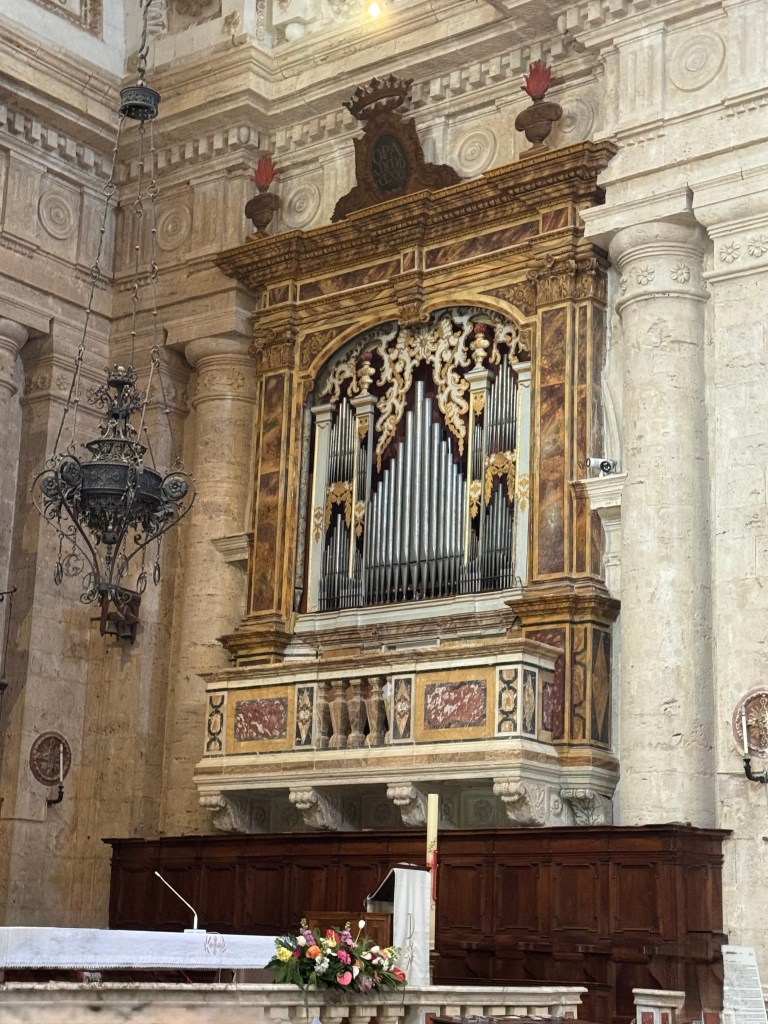
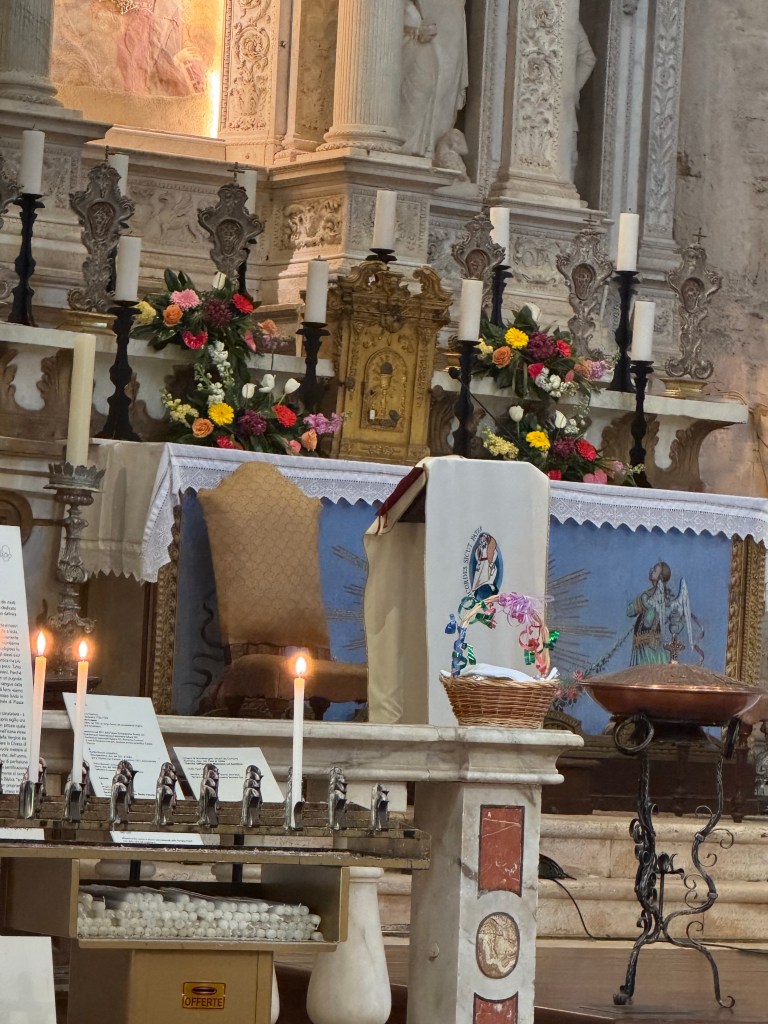
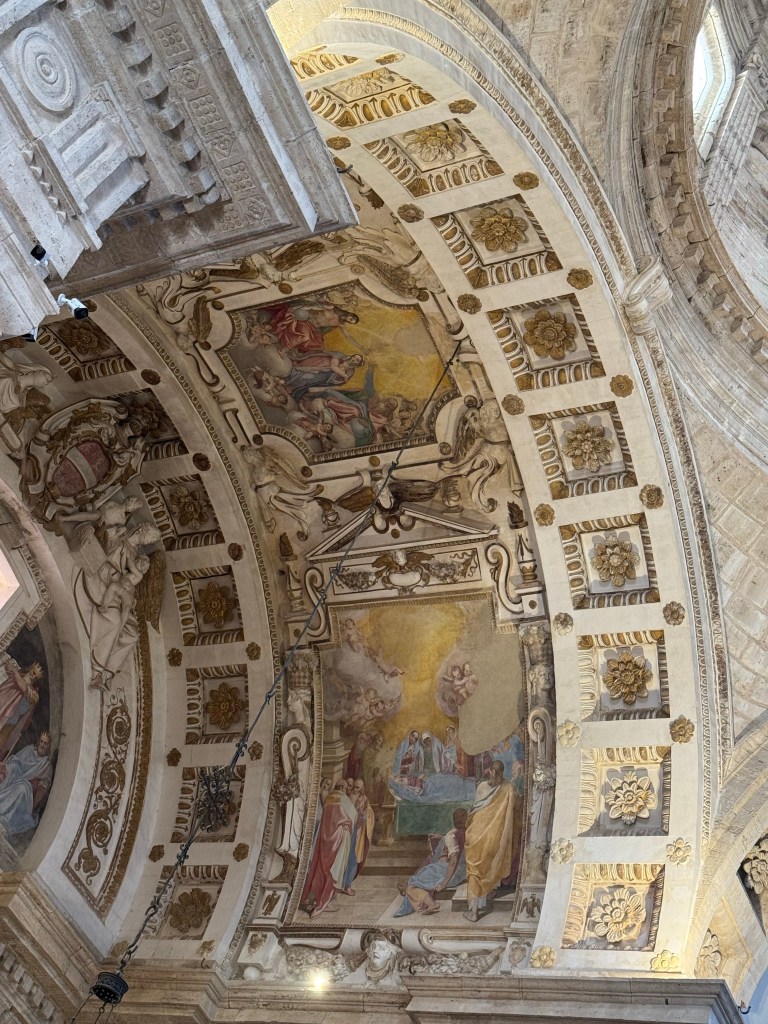
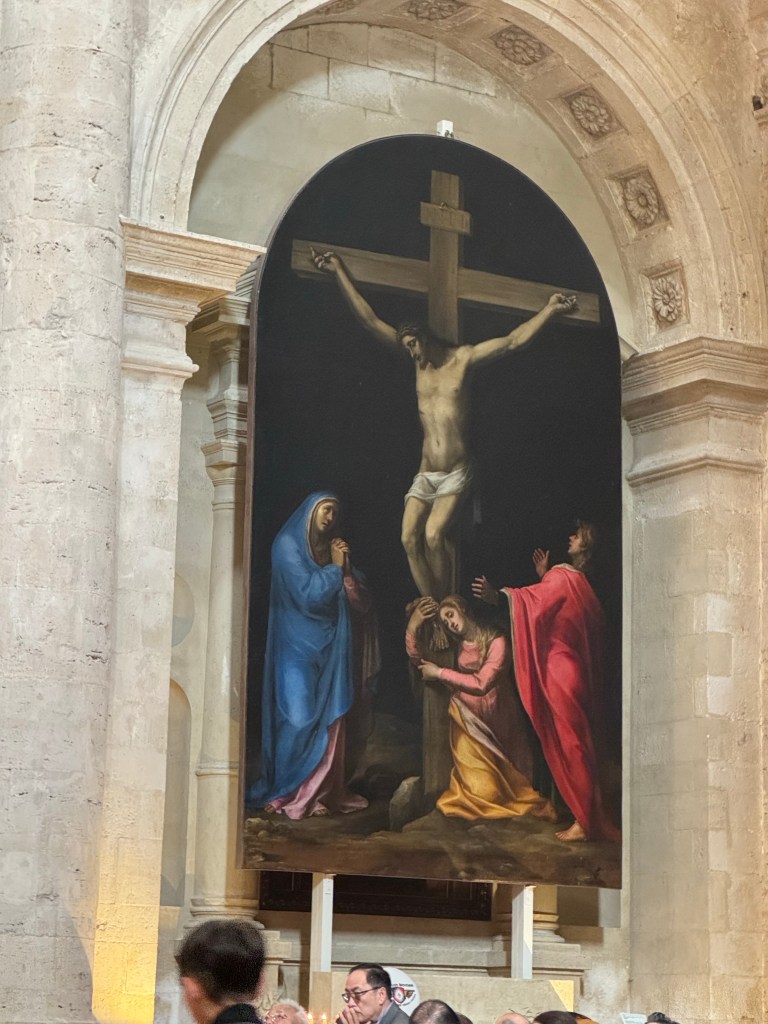
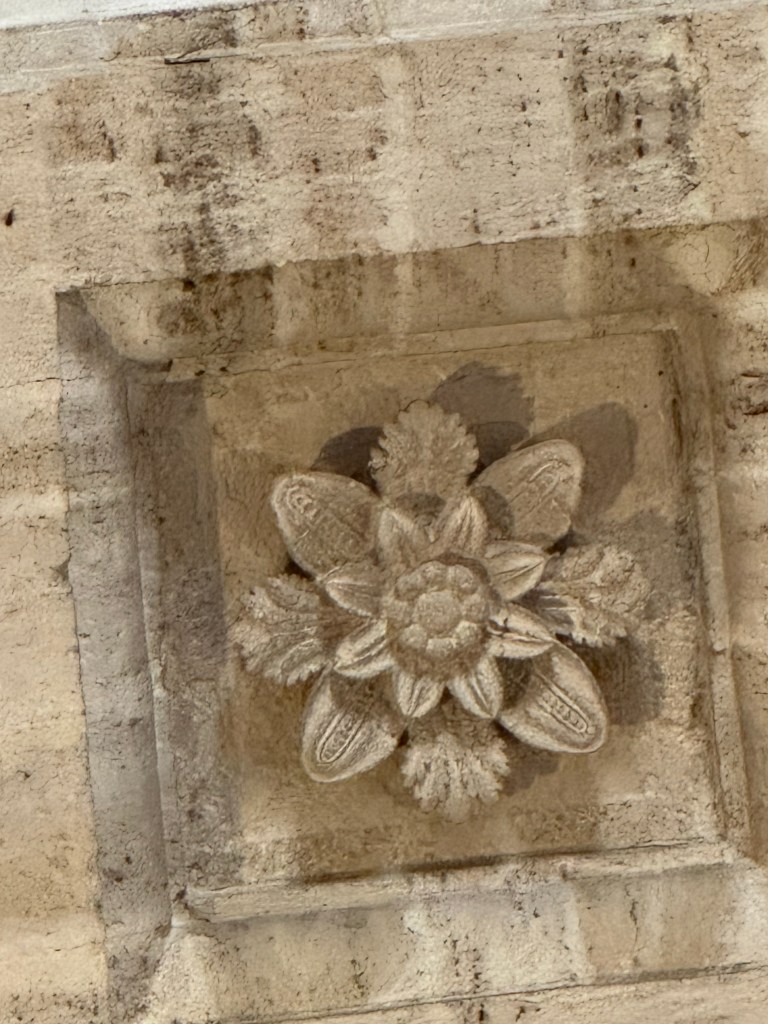
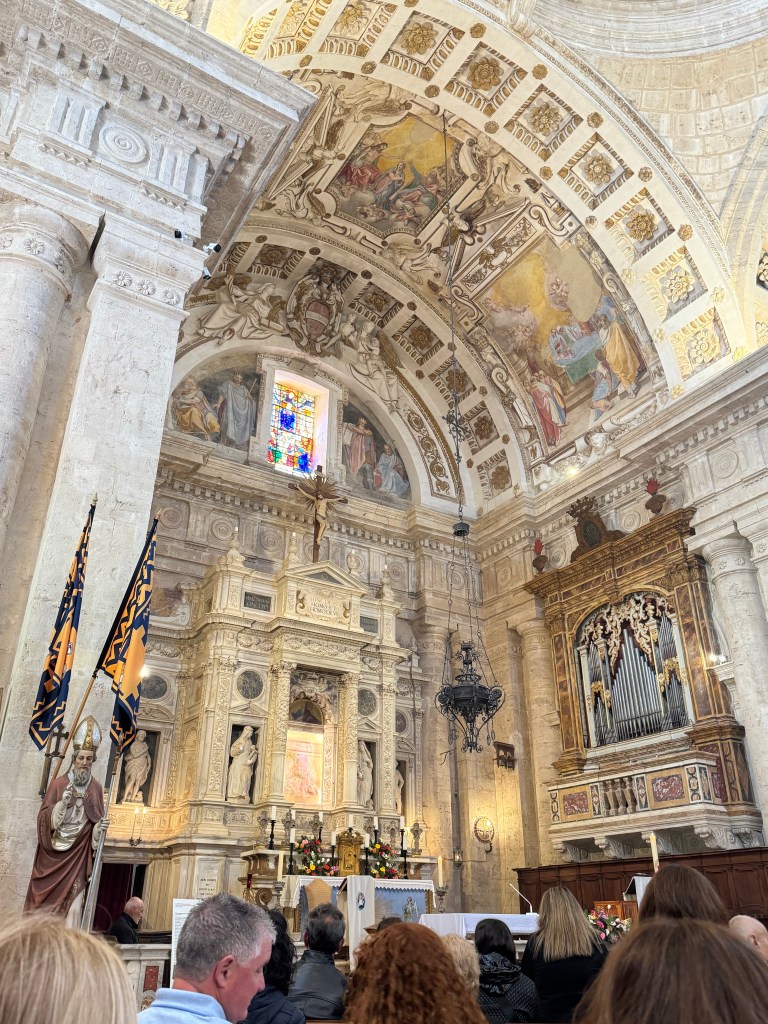
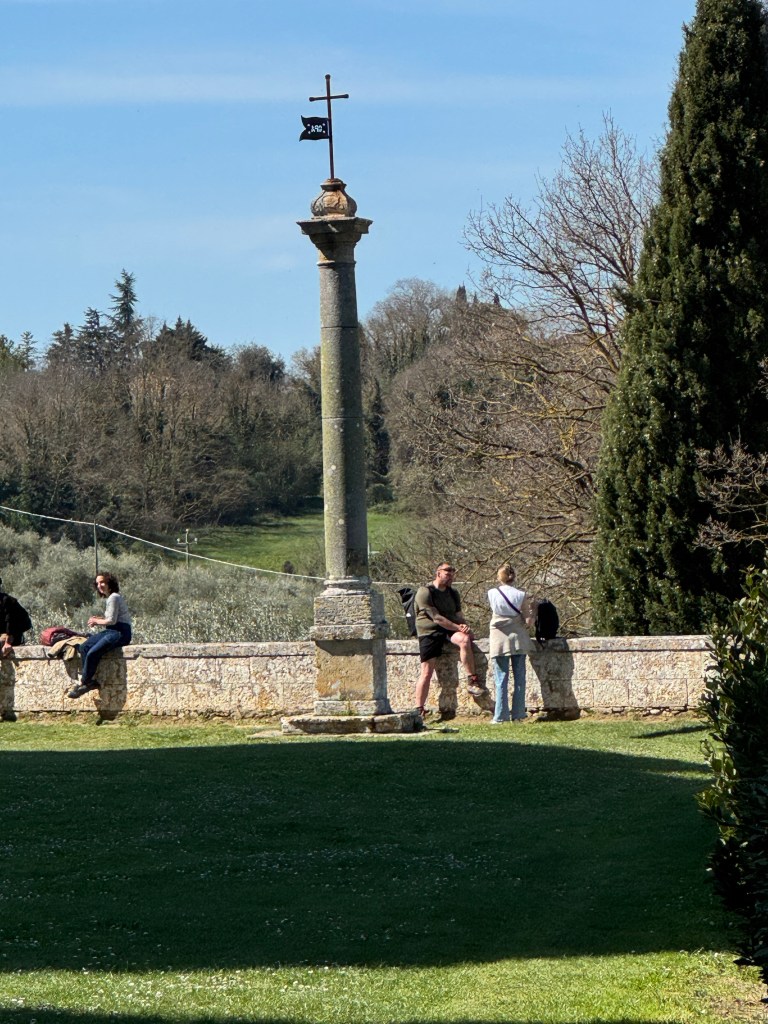
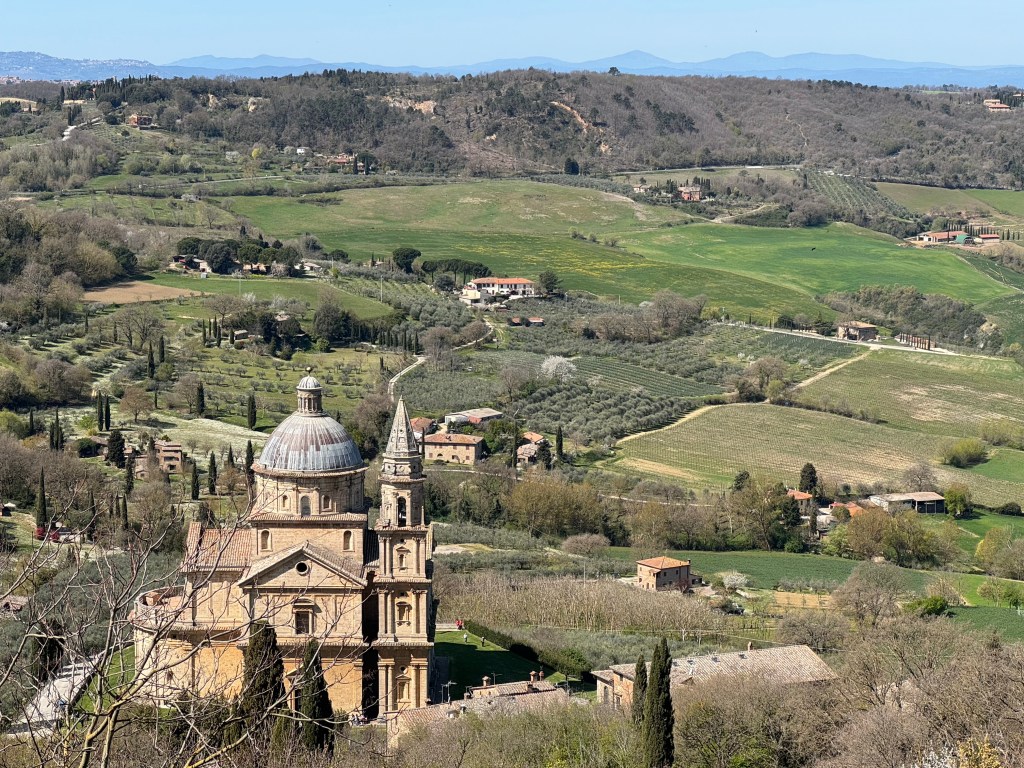
Today, Easter Sunday, I woke up, and made my way to Tempio di San Biagio for Easter mass. The church is in many photos of Montepulciano and sits just outside the walls, down the hill. Construction started in 1518 and was finished in the later portion of the century. The church was built to replace another church that had fallen into ruin. In 1518 people claimed a “miracle” occurred when the eyes of the Virgin Mary, in a 14th century fresco that was still standing after the original church had fallen, moved, as if she was alive. I guess this town has had a few “miracles”. The church is beautiful, as were the mass, the songs, and the celebration. It was so crowded many had to stand, and there were a few well-behaved dogs in attendance as well. I was happy I got there early to get a seat close to the front. So many people went up for communion that I noticed the priest had to break the wafers so he would have enough.
After mass I walked home, ate colomba, made coffee, opened my chocolate egg, and relaxed for the day. Tomorrow, Pasquetta, I have the day off from school. I can’t believe I’m starting my fourth and final week in Montepulciano. What an amazing experience living here has been.
Buona Pasqua a tutti!
Ciao! 413 Girl 💕
 413 Girl Travels the World
You must be logged in to post a comment.